LOCAL
A Continental Shift: Europe Assumes Command as Trump Administration Reshapes NATO
European NATO allies adjust to ‘NATO 3.0’ as the Trump administration shifts focus to the Indo-Pacific, leaving Europe to lead regional defense and Ukraine aid.


The Empty Chair in Brussels
In the corridors of NATO headquarters in Brussels this week, the atmosphere was marked by a quiet but profound transformation. For the second time in as many months, a high-ranking member of the United States cabinet was absent from a critical decision-making summit. Defense Secretary Pete Hegseth’s decision to skip Thursday’s gathering of defense ministers, following Secretary of State Marco Rubio’s absence in December, has signaled to European allies that the era of American-centric leadership is rapidly evolving into something far more decentralized—and uncertain.
Publicly, the tone remained diplomatic. Icelandic Foreign Minister Þorgerður Katrín Gunnarsdóttir remarked that while ministerial attendance is always preferred, the absence was not a “bad signal.” German Defense Minister Boris Pistorius echoed this sentiment, citing full agendas and personal duties. However, beneath the surface of these polite dismissals lies a seismic shift in the world’s most powerful military alliance. The “lion’s share” of European defense is no longer a future expectation; it is a current reality being thrust upon the continent’s capitals.
Defining ‘NATO 3.0’
The historical mantra of NATO, famously articulated by its first secretary-general Lord Hastings Ismay, was to “keep the Americans in, the Russians out and the Germans down.” Today, that formula has been fundamentally rewritten. Under the vision of Under Secretary of Defense Elbridge Colby, who represented the U.S. in Hegseth’s stead, the alliance is moving toward what he calls “NATO 3.0.” This version of the organization is “rooted in shared strength and realism,” where the United States maintains its nuclear umbrella but expects Europe to provide the “preponderance of forces” for conventional deterrence.
Colby’s address to the ministers underscored a strategic pivot that has been brewing for years but has accelerated under the current Trump administration. With Washington’s eyes increasingly fixed on the Indo-Pacific and the Western Hemisphere, Europe is being told that it must be the primary architect of its own security. The message is clear: the U.S. is no longer the default first responder for European territorial disputes.
The Financial Burden of Autonomy
This shift is most visible in the ongoing support for Ukraine. The Biden-era flow of American weaponry and funding has largely ceased, replaced by a model where European allies and Canada are obliged to purchase American-made hardware to donate to Kyiv. The Ukraine Defense Contact Group, once a Pentagon-led powerhouse, is now co-chaired by the United Kingdom and Germany. This week, U.K. Defense Secretary John Healey announced an additional £500 million in air defense for Ukraine, while countries like Sweden and the Netherlands are funding American-made equipment and training programs independently.
Germany, once the laggard of NATO spending, is now a cornerstone of this new architecture. Since the invasion of Ukraine four years ago, Berlin has committed over 100 billion euros to modernize its forces. While this fulfills long-standing U.S. demands for “burden sharing,” it also creates a new power dynamic within Europe, as the continent’s largest economy takes a leading role in regional security that it had avoided for decades.
Guarding the High North
One of the most tangible outcomes of the Brussels meeting was the launch of “Arctic Sentry.” Nominally designed to counter Russian and Chinese incursions in the High North, the initiative is also widely viewed as a strategic hedge against the Trump administration’s unpredictable interests in the region—specifically the renewed talk of annexing Greenland. By bringing existing national drills under a NATO umbrella, the alliance seeks to solidify the territorial integrity of its members against any external or internal pressures.
Yet, “Arctic Sentry” remains a rebranding of existing efforts, and the level of U.S. participation remains a question mark. U.S. Ambassador to NATO Matthew Whitaker emphasized that the U.S. cannot be the sole provider of security in any theater, urging “capable allies” to bring more assets to the table. This rhetoric reinforces the administration’s stance: American involvement is conditional on European investment.
The Risks of a Retrenching Superpower
While the Trump administration frames this as a necessary evolution, a group of 16 former U.S. ambassadors and military officers issued a stern warning this week. They argued that any significant U.S. withdrawal or erosion of trust within NATO would not yield a “peace dividend” but would instead result in higher costs and a dangerous loss of American global influence. For European allies, the challenge is now a delicate balancing act: building the “strategic autonomy” required to survive a less engaged America, while trying to prevent a total U.S. withdrawal that could leave the continent vulnerable to a resurgent Russia.

LOCAL
Your Current 3 Day Forecast — October 23, 2026
Your Current 3 Day Environment Canada forecast for Miramichi, Rogersville, Doaktown.

THE MIRAMICHI CURRENT · WEATHER
Your Current 3 Day Forecast
October 23, 2026
Across our communities
| Community | High / low | Rain | Wind | Alert |
|---|---|---|---|---|
| Miramichi | 13° / -3° | 0% | N 20 km/h | None |
| Rogersville | 13° / -3° | 0% | N 20 km/h | None |
| Doaktown | 13° / -5° | 0% | N 20 km/h | None |
Miramichi
Now
8.3°
Current condition unavailable
Sunrise 7:51 a.m. · Sunset 6:21 p.m.
Moon: Waxing gibbous · 94% lit
Observed 5:00 p.m.
Next 12 hours
Tonight
A few clouds. Wind north 20 km/h gusting to 40 becoming light overnight. Low minus 3. Wind chill minus 8 overnight.
Rain 0%Wind 20 km/hGusts 40 km/h
Saturday
Sunny. Wind up to 15 km/h. High 13. Wind chill minus 7 in the morning. UV index 2 or low.
Rain 0%Wind 10 km/h
Sunday
Sunny. High 15.
Rain 0%Wind 0 km/h
Rogersville
Now
6.5°
Current condition unavailable
Sunrise 7:50 a.m. · Sunset 6:20 p.m.
Moon: Waxing gibbous · 94% lit
Observed 5:00 p.m.
Next 12 hours
Tonight
A few clouds. Wind north 20 km/h gusting to 40 becoming light overnight. Low minus 3. Wind chill minus 8 overnight.
Rain 0%Wind 20 km/hGusts 40 km/h
Saturday
Sunny. Wind up to 15 km/h. High 13. Wind chill minus 7 in the morning. UV index 2 or low.
Rain 0%Wind 10 km/h
Sunday
Sunny. High 15.
Rain 0%Wind 0 km/h
Doaktown
Now
9.2°
Current condition unavailable
Sunrise 7:53 a.m. · Sunset 6:24 p.m.
Moon: Waxing gibbous · 94% lit
Observed 5:00 p.m.
Next 12 hours
Tonight
Clear. Wind north 20 km/h becoming light this evening. Low minus 5.
Rain 0%Wind 20 km/h
Saturday
Sunny. High 13. UV index 2 or low.
Rain 0%Wind 0 km/h
Sunday
Sunny. High 16.
Rain 0%Wind 0 km/h
Track the weather
Last checked 2026-10-23T20:15:25.000Z · Changed: Miramichi, Rogersville, Doaktown · hourly · Next check 2026-10-23T21:15:00.000Z
LOCAL
Dissident PC Member Prepares to Launch New Political Option in New Brunswick
Former Progressive Conservative member Jason Purdy plans to establish the New Brunswick Party following Daniel Allain’s PC leadership election victory.
Former Conservative Activist Mobilizes New Political Movement
Voters in New Brunswick could soon see a new political option on their ballots as Jason Purdy, a former Progressive Conservative Party member, prepares to register a centre-right organization called the New Brunswick Party. Purdy, a resident of Noonan near Fredericton, stated that his decision follows the recent PC leadership victory of Daniel Allain. Disagreeing with Allain’s vision of a socially progressive and fiscally conservative party, Purdy aims to offer an alternative for traditional conservative voters who feel unrepresented by the current leadership.
Registration Rules and Leadership Response
Under provincial electoral laws, registering a new political entity requires forming riding associations in at least 10 provincial ridings, with a minimum of 10 candidates needed to secure a spot on the election ballot. Purdy expects to complete the registration process within a month, citing initial support from a dozen organizers and interest from several hundred supporters. Should a provincial byelection be triggered for Allain—who currently does not hold a seat in the legislature—Purdy intends to run a candidate against him. For his part, Allain dismissed concerns that a new entity would divide votes, expressing confidence in his party’s existing membership strength following his victory over MLA Don Monahan.
Historical Context and Political Reactions
If successfully registered, the New Brunswick Party would mark the third Tory breakaway movement in the province over the past four decades. Previous historical splinters include the Confederation of Regions party in 1989 and the People’s Alliance in 2010. Addressing the initiative, PC caucus member Kris Austin characterized the creation of another political group as counterproductive, arguing that conservative voters must find common ground rather than risk public division. Meanwhile, Purdy emphasized that his proposed party will actively reject radical or extreme ideologies from both sides of the political spectrum.
COMMUNITY
What the Latest Strike Delay Means for the Arbec Wellness Centre Opening
Miramichi’s Arbec Wellness Centre opening is pushed to early next year following a summer electricians’ strike that added $250,000 to project costs.
Cost and Schedule Impacts
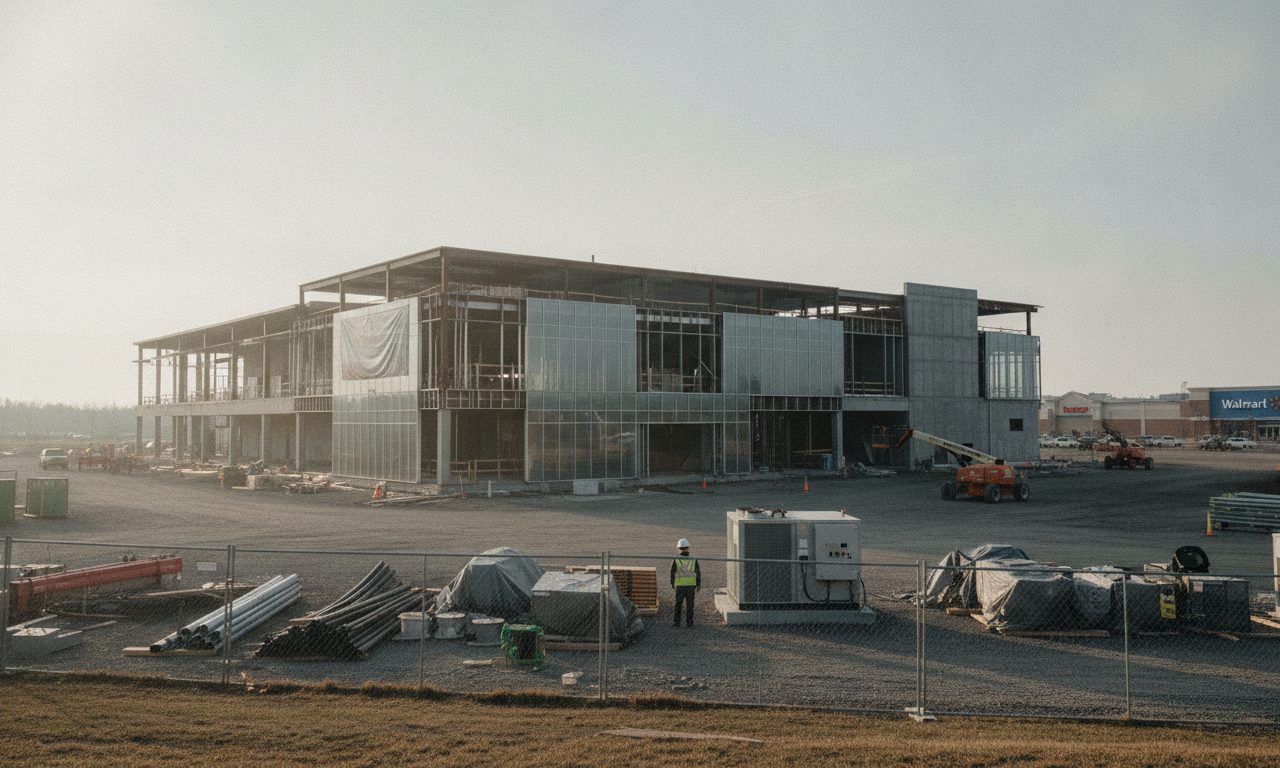
The budget for Miramichi’s new Arbec Wellness Centre has risen by approximately $250,000 following a four-week labor dispute. The project’s price tag now stands at an estimated $100.8 million, up from $100.6 million. Construction is now expected to wrap up around Jan. 22, setting up a potential move-in date in February after a two- to four-week transition period.
Strike Causes Ripple Effect
Speaking at the Sept. 29 council-in-committee meeting, CBCL Limited engineer Tim McLeod explained that the summer walkout by International Brotherhood of Electrical Workers Local 1555 caused wider scheduling disruptions. While the strike has ended, its impact extended beyond electrical work to delay mechanical and commissioning activities that relied on critical path milestones.
Facility Location
The long-awaited municipal facility is currently nearing completion off Douglastown Boulevard, situated west of Service Canada and Walmart.
Your Current 3 Day Forecast — October 23, 2026
Dissident PC Member Prepares to Launch New Political Option in New Brunswick

A Conservative Organizer Aims to Launch a New Centre-Right Movement in New Brunswick

Why B.C. Lions Starters Are Resting as the Regular Season Concludes Against Winnipeg

What the Latest Strike Delay Means for the Arbec Wellness Centre Opening

Why Alberta’s Government Is Ruling Out Future Separation Votes

B.C. Supreme Court Grants Cowichan Tribes Title to Historic Richmond Lands and Fishing Rights

Vancouver Canucks Gear Up for a Make-or-Break 2025–26 Season

Land Title and Reconciliation: Canada Can’t Afford to Let Uncertainty Fester

Team B.C. Secures Margaret Todd Trophy at National Women’s Mid-Amateur Golf

Ottawa Unveils Build Canada Homes with $13B to Tackle Housing Crisis

Blue Jays Extend Win Streak, but Lose Bichette for Regular Season
-
 NATIONAL STORIES7 days ago
Why Albertans Are Heading to the Polls on the Question of Canadian Unity
-

 NB STORIES6 days ago
New Brunswick Progressive Conservatives to Reveal New Leader as Convention Concludes
-
 NATIONAL STORIES6 days ago
Decades of Western Alienation Lead Albertans to Referendum on Canada’s Future
-
LOCAL5 days ago
Your Current 3 Day Forecast — October 19, 2026
-
LOCAL7 days ago
Your Current 3 Day Forecast — October 17, 2026
-
NATIONAL STORIES5 days ago
Tragedy at CFB Wainwright frames last-minute calls for unity as Albertans prepare for referendum vote
-
LOCAL6 days ago
Your Current 3 Day Forecast — October 18, 2026
-
NB STORIES4 days ago
Why Calls for Mandatory Training for New Municipal Leaders Are Growing in New Brunswick