energy
Global Energy Markets Braced for Impact as Trump Declares Iran Ceasefire on ‘Life Support’
President Trump declares Iran ceasefire on ‘life support’ as oil prices surge and U.S. considers military escorts for tankers in the Strait of Hormuz.


Rising Tensions in the Strait of Hormuz
President Donald Trump has cast a shadow over international diplomatic efforts by declaring the current ceasefire with Iran to be on ‐massive life support.‐ The statement follows the President’s outright rejection of Tehran’s latest peace proposals, which he dismissed as ‐garbage‐ and ‐stupid.‐ The collapse of these negotiations has immediately reignited fears of a prolonged blockade in the Strait of Hormuz, a vital artery for global oil supplies.
The Standoff Over Naval Escorts
In response to the deadlock, the White House is reportedly reconsidering the deployment of U.S. Navy military escorts for commercial vessels through the Strait. This move, previously dubbed ‐Project Freedom,‐ was briefly paused to allow for diplomatic cooling. However, with Iran demanding the recognition of its sovereignty over the waterway and the lifting of all sanctions before further talks, the U.S. appears ready to pivot back to a military posture. This escalation comes despite resistance from regional allies like Saudi Arabia, who have expressed concerns over the potential for a wider conflict.
Economic Fallout and Humanitarian Concerns
The impact of the impasse was felt instantly in the energy markets, with oil prices surging past $105 a barrel. Beyond the financial markets, a humanitarian crisis is looming in the Gulf. The International Maritime Organization (IMO) reports that nearly 1,500 tankers and 20,000 seafarers are currently stranded due to the blockade. Supplies of food, water, and fuel for these crews are reportedly reaching critical lows, prompting urgent calls from Omani officials for humanitarian intervention.
Geopolitical Implications for the Beijing Summit
The timing of the collapse is particularly sensitive as President Trump prepares for a high-stakes summit with Chinese President Xi Jinping in Beijing. China, a major purchaser of Iranian oil, is unlikely to support U.S. requests for tighter restrictions on Tehran. With Iran’s domestic economy under severe strain—evidenced by mandatory power cuts and dwindling medicine reserves—the international community remains on edge as the prospect of a diplomatic resolution appears increasingly remote.


energy
Stampede Diplomacy: Energy Policy and Separatist Tensions Collide in Calgary
Calgary Stampede becomes a political battleground as energy policy and separatist movements clash, highlighting the growing divide between Alberta and Ottawa.

Political Tensions Rise Amidst the Calgary Stampede
The Calgary Stampede, traditionally celebrated as a showcase of Western heritage and a massive networking hub for the energy sector, has taken on a distinctly political edge this year. As federalists and provincial separatists converge on the city, the event has become a microcosm of the deepening divide between Alberta and the federal government. With pipelines and regional autonomy taking center stage, the festive atmosphere is increasingly punctuated by heated debates over the province’s future within the federation.
The Energy Infrastructure Imperative
For Alberta’s political and business leaders, the Stampede serves as a critical platform to advocate for the energy industry. The conversation is dominated by the need for expanded pipeline capacity and a more favorable regulatory environment. Advocates argue that without significant movement on energy infrastructure, the economic prosperity of both the province and the country remains at risk. This year, the presence of federal representatives has drawn sharp focus to the perceived hurdles imposed by Ottawa, fueling frustration among those who feel the West is being ignored.
Separatism and the Quest for Sovereignty
Adding a new layer of complexity to the usual political posturing is the visible presence of separatist movements. Fringe groups and more organized sovereignty advocates are using the high-profile nature of the Stampede to reach a broader audience. These groups argue that the current federal structure is fundamentally broken and that Alberta should explore independence to protect its economic interests. While federalist leaders are working to bridge the gap through dialogue and policy promises, the vocal separatist sentiment highlights a growing sense of alienation that is becoming harder to ignore in the heart of the Canadian West.
energy
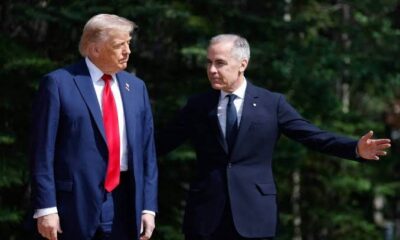
Prime Minister Mark Carney Reverses Climate Strategy in Bid for National Unity
PM Mark Carney announces a shift in Canada’s energy plan, allowing higher emissions to prioritize national unity and support Alberta’s oil and gas sector.

A Strategic Pivot Toward Fossil Fuels
In a significant departure from the previous administration’s environmental priorities, Prime Minister Mark Carney announced a major shift in Canada’s energy strategy on Tuesday. In a video released as part of his ‘Forward Guidance’ series, Carney admitted that Canadian greenhouse gas emissions will likely rise in the coming years as the government re-embraces the oil and gas sector. The Prime Minister framed this decision as a necessary step to maintain national unity and ensure long-term economic stability.
Repairing the Federal-Provincial Rift
The policy shift serves as a direct olive branch to Alberta, where frustration over federal climate regulations has fueled a growing separatist movement. With a referendum on Alberta’s future in Canada looming this October, Carney characterized the previous government’s emissions caps and carbon pricing as ‘unsustainable’ and ‘divisive.’ By negotiating a new energy accord that includes support for a West Coast oil pipeline, Carney hopes to quell regional tensions and position Canada as a reliable global energy provider.
Critics Warn of Climate Failure
The announcement has sparked immediate backlash from environmental advocates and former political allies. Steven Guilbeault, the former Environment Minister under Justin Trudeau, recently resigned from the cabinet in protest of these rollbacks. Organizations like Stand.Earth and Amnesty International have condemned the move, calling it an ‘admission of defeat’ regarding Canada’s Paris Agreement commitments. While Carney maintains that Canada remains committed to its 2030 targets, current projections suggest the country is significantly off track to meet its goals of reducing emissions by 40 to 45 percent.
The Dual Path: Oil and Electrification
Despite the renewed focus on conventional energy, Carney argued that the future of Canadian competitiveness lies in a massive expansion of the electrical grid. The government’s strategy aims to double national electrical capacity by 2050 using a mix of nuclear, renewables, and natural gas. To mitigate the environmental impact of increased oil production, the federal-provincial accord hinges on the completion of the Pathways carbon capture project, illustrating Carney’s attempt to balance industrial growth with eventual decarbonization.
energy
Global Shipping on Alert as US-Iran Deal Promises to Reopen Strategic Strait of Hormuz
A US-Iran deal could see Strait of Hormuz traffic hit 50% of prewar levels in a month, though mine risks and toll disputes remain for global shipping.

A Potential Return to Maritime Stability
The global energy market and shipping industry are bracing for a significant shift as the United States and Iran prepare to sign a landmark agreement this Friday in Switzerland. According to analysts at trade data firm Kpler, ship traffic through the critical Strait of Hormuz could surge to 50% of prewar levels within just 30 days of the deal’s implementation. The agreement is expected to lift the U.S. naval blockade of Iran, effectively reopening a waterway that historically handled 20% of the world’s global oil supply.
Clearing the Persian Gulf Backlog
Data indicates that the immediate aftermath of the reopening will see a massive exodus of stranded vessels. There are an estimated 118 fully loaded tankers currently trapped within the Persian Gulf that could exit the region within the first 15 days. While this initial surge is a one-time event, the long-term recovery depends on how many vessels choose to re-enter the Gulf. Kpler analysts predict that incoming tanker traffic could stabilize at roughly 12 vessels per day, significantly up from the near-standstill seen since the conflict began on February 28.
Lingering Security Concerns and Mine Risks
Despite the diplomatic progress, the shipping industry remains cautious. Maritime trade group Bimco has warned that the security situation remains volatile, specifically citing the threat of underwater mines. While President Donald Trump has downplayed the risk, Secretary of State Marco Rubio recently informed Congress that Iran had mined large segments of the strait. Jakob Larsen, Bimco’s chief safety and security officer, cautioned that the lack of technical detail makes transits ‘very risky’ at this stage. Shippers are expected to monitor the first wave of transits closely before insurance rates begin to normalize.
Diplomatic Friction Over Tolls and Governance
Political hurdles also remain, as Washington and Tehran appear to have conflicting interpretations of the treaty. Iranian state media reports suggest that after a 60-day toll-free grace period, Iran and Oman will jointly administer the strait and potentially collect fees. Conversely, U.S. Vice President JD Vance has stated that the American expectation is for the Strait of Hormuz to remain a toll-free international waterway indefinitely. This discrepancy could pose a threat to the durability of the deal as the maritime industry looks for long-term certainty.
Your Current 3 Day Forecast — October 23, 2026
Dissident PC Member Prepares to Launch New Political Option in New Brunswick

A Conservative Organizer Aims to Launch a New Centre-Right Movement in New Brunswick

Why B.C. Lions Starters Are Resting as the Regular Season Concludes Against Winnipeg

What the Latest Strike Delay Means for the Arbec Wellness Centre Opening

Why Alberta’s Government Is Ruling Out Future Separation Votes

B.C. Supreme Court Grants Cowichan Tribes Title to Historic Richmond Lands and Fishing Rights

Vancouver Canucks Gear Up for a Make-or-Break 2025–26 Season

Land Title and Reconciliation: Canada Can’t Afford to Let Uncertainty Fester

Team B.C. Secures Margaret Todd Trophy at National Women’s Mid-Amateur Golf

Ottawa Unveils Build Canada Homes with $13B to Tackle Housing Crisis

Blue Jays Extend Win Streak, but Lose Bichette for Regular Season
-
 NATIONAL STORIES7 days ago
Why Albertans Are Heading to the Polls on the Question of Canadian Unity
-

 NB STORIES6 days ago
New Brunswick Progressive Conservatives to Reveal New Leader as Convention Concludes
-
 NATIONAL STORIES6 days ago
Decades of Western Alienation Lead Albertans to Referendum on Canada’s Future
-
LOCAL4 days ago
Your Current 3 Day Forecast — October 19, 2026
-
LOCAL6 days ago
Your Current 3 Day Forecast — October 17, 2026
-
NATIONAL STORIES5 days ago
Tragedy at CFB Wainwright frames last-minute calls for unity as Albertans prepare for referendum vote
-
LOCAL5 days ago
Your Current 3 Day Forecast — October 18, 2026
-
NB STORIES4 days ago
Why Calls for Mandatory Training for New Municipal Leaders Are Growing in New Brunswick