Finance
Oil Prices Pivot as U.S. Strikes in Iran Dampen Hopes for Diplomatic Breakthrough
U.S. strikes on Iranian targets send oil prices surging, complicating diplomatic deal hopes and raising fears of a global recession via the Strait of Hormuz.


Volatility Returns to Energy Markets
Oil prices surged during early Tuesday trading in Asia, effectively erasing a significant portion of Monday’s 5% slump. The sudden price reversal follows reports of fresh U.S. military strikes targeting missile sites and naval vessels in southern Iran. While markets had previously rallied on optimism that a framework agreement between Washington and Tehran was within reach, the latest kinetic action has introduced a new layer of uncertainty into the nearly three-month-long regional crisis.
The Multi-Front Conflict in the Persian Gulf
The U.S. Central Command (CENTCOM) defended the operations as a matter of ‘self-defense.’ Capt. Tim Hawkins, a spokesperson for Central Command, emphasized that the U.S. military continues to protect its assets while attempting to maintain restraint under the conditions of an ongoing, albeit fragile, ceasefire. However, the strikes have complicated the security landscape in the Persian Gulf and around the critical Strait of Hormuz. Despite President Donald Trump’s recent public assurances that the Strait would soon reopen for free navigation, vessel traffic remains inconsistent, with only a marginal uptick in energy cargoes reaching international buyers.
The Disconnect Between Diplomacy and Fundamentals
For several weeks, the noise surrounding potential diplomatic deals has largely overshadowed market fundamentals. Traders have been quick to price in the possibility of a resolution, often ignoring the reality of a global energy crunch caused by Middle Eastern supply being trapped behind the blockade. This optimistic bias has led to sharp price swings, but experts warn that the underlying supply deficit cannot be ignored forever. The current situation suggests that geopolitical ‘noise’ may be blinding investors to the actual risks of a prolonged shutdown.
Economic Warning Signs and the Threat of Recession
The stakes for the global economy are high. Fereidun Fesharaki, Chairman Emeritus of energy consultancy FGE NexantECA, recently told CNBC that the market must prepare for a significant price spike in July. Fesharaki warned that a four-month closure of the Strait of Hormuz is a ‘recipe for disaster’ that could trigger a global recession. While market participants are currently clinging to every piece of positive diplomatic news, the reality of military escalation suggests that the ‘worst-case scenario’ may be closer than many are willing to admit.

Finance
Bank of Canada Holds Rates Steady at 2.25% Amid Geopolitical Oil Volatility
The Bank of Canada holds its key interest rate at 2.25%, balancing economic recovery confidence against inflation risks from global energy market volatility.

Central Bank Maintains Status Quo Amid Economic Recovery
The Bank of Canada announced on Wednesday that it will maintain its benchmark interest rate at 2.25 per cent for the sixth consecutive time. The decision, which aligns with broad economist expectations, reflects a growing confidence within the central bank that the domestic economy is successfully navigating a series of recent headwinds, including a surprising contraction at the beginning of the year.
Navigating the Impact of Global Conflict
Bank of Canada Governor Tiff Macklem addressed the ongoing uncertainty stemming from the conflict in Iran, which has sent global energy prices soaring. While inflation reached 3.2 per cent in May primarily due to gasoline costs, the bank remains optimistic that these spikes have not yet broadly permeated the consumer basket. However, Macklem warned that the governing council remains vigilant. Should supply chain bottlenecks in the Strait of Hormuz persist or energy prices remain elevated, the bank is prepared to implement further rate hikes to prevent inflation from becoming entrenched.
Forecast for Growth and Resilience
Despite a sluggish start to 2026 marked by slowing population growth and trade tariffs, the bank’s updated monetary policy report projects a second-quarter growth rebound of 2.5 per cent. This recovery is expected to be driven by a stabilization in the housing market, consumer resilience, and a notable momentum in exports to the United States. Macklem noted that Canadian businesses are proving adaptable, reconfiguring supply chains to maintain operations despite global instability.
The Long Road to Two Per Cent Inflation
The central bank anticipates that the knock-on effects of Middle Eastern hostilities will continue to influence grocery and fuel prices through early 2027. While a weak Canadian dollar may drive up the cost of imported goods, economists from CIBC suggest that there is still significant slack in the economy. This output gap supports the current projection that rates will likely remain on hold for the remainder of 2026 as the bank strikes a delicate balance between supporting recovery and curbing persistent price pressures.
Economy
Ottawa Defends Deficit Spending as Bridge to Future Economic Growth
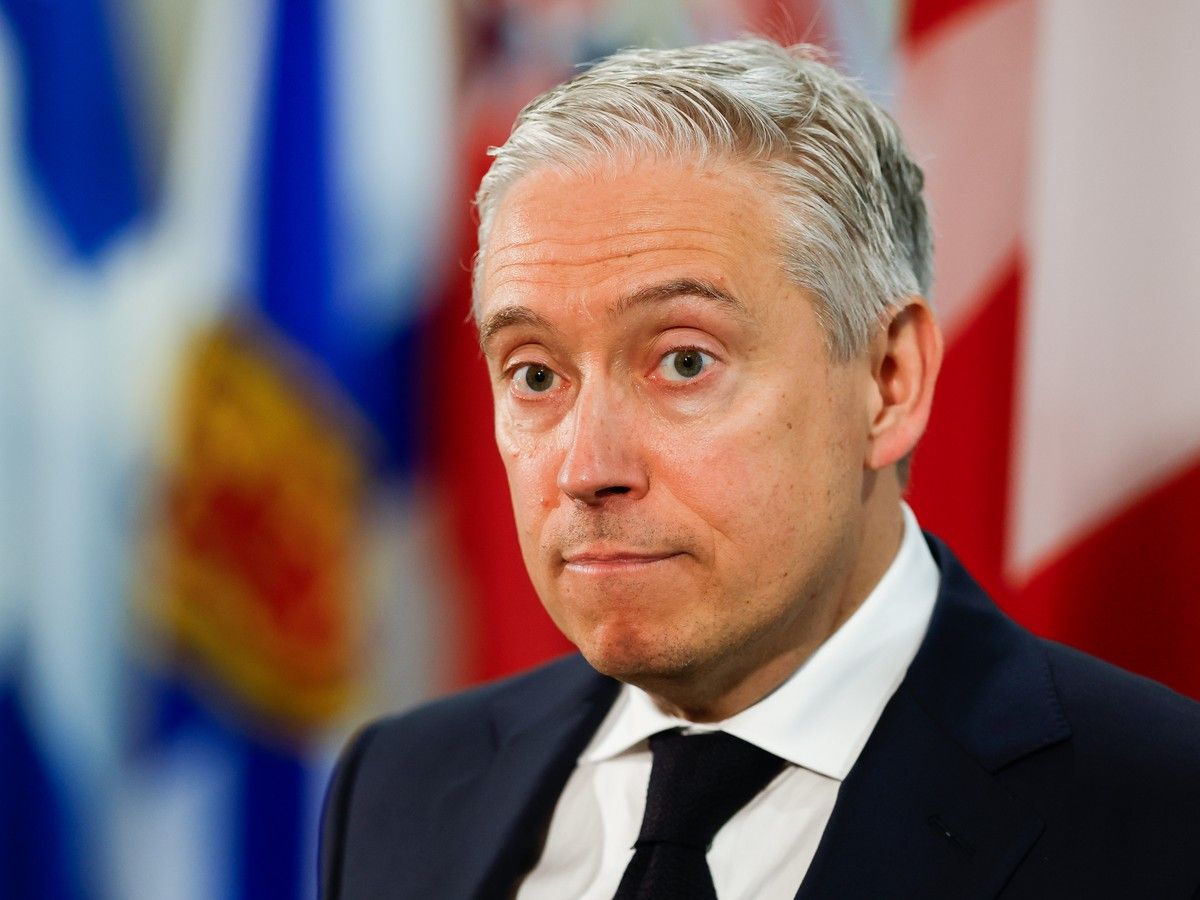
Finance Minister François-Philippe Champagne defends Canada’s deficit spending, citing G7 fiscal strength and future growth plans amid economist skepticism.
Fiscal Strategy vs. Growing Debt Concerns
The federal government is doubling down on its high-spending agenda, signaling that it will rely on projected economic growth to offset significant new expenditures. Speaking in Ottawa ahead of pre-budget consultations, Finance Minister François-Philippe Champagne defended the government’s fiscal trajectory, arguing that strategic investments are necessary to stimulate the national economy despite the reality of rising deficits.
Champagne emphasized that Canada maintains the strongest fiscal position among G7 nations, a metric the government frequently cites to justify increased borrowing. According to the Minister, the current spending focuses on areas that will eventually yield higher productivity and innovation, which he believes will stabilize the country’s debt-to-GDP ratio in the long term.
Skepticism Among Economic Experts
Despite the government’s optimism, many economists remain wary of the reliance on future growth to pay for today’s debts. Don Drummond, a former high-ranking official at the Department of Finance and former TD Bank chief economist, warned that the government may be resting its projections on overly optimistic forecasts. Drummond noted that the assumption of imminent growth mirrors the fiscal mistakes made between the mid-1970s and 1990s, which led to a prolonged period of economic vulnerability.
Critics also point to external threats, such as potential shifts in American trade policy and rising tariffs, which could stifle the growth Ottawa is counting on. While the government has proposed removing interprovincial trade barriers and leveraging defense procurement to spark innovation, analysts argue these measures are unlikely to provide the immediate financial relief needed to cover high-cost projects.
The Road to the Next Federal Budget
The official pre-budget consultation period is now underway, with the government inviting business leaders, think tanks, and the general public to submit their priorities. While the online portal remains open until September 8, the debate over Canada’s fiscal health is intensifying. As the government prepares its next financial roadmap, the central challenge remains balancing the desire for transformative public investment with the necessity of fiscal sustainability in an increasingly volatile global market.
business
Markets Outlook: Trump Economic Forecasts, Fed Speculation, and Surging Prediction Volumes
Explore Monday’s market outlook featuring Trump’s economic interviews, surging prediction market volumes, and upcoming Fed minutes and corporate earnings.

Mixed Market Open Following Historic Highs
Wall Street is bracing for a complex start to the week as stock futures show mixed movement on Monday morning. This cautious positioning comes on the heels of a triumphant week for equities, during which the Dow Jones Industrial Average reached a new all-time high. Investors are currently weighing a cooling labor market against the potential for shifting Federal Reserve policy, particularly after Thursday’s weaker-than-expected jobs report fueled optimism that interest rate hikes may finally be off the table.
Trump Discusses Economic Vision and AI Superiority
In a wide-ranging exclusive interview with CNBC, former President Donald Trump outlined a bold economic agenda ahead of the nation’s 250th anniversary. Trump emphasized a push for domestic independence in the semiconductor industry, stating he expects 40% to 60% of chip manufacturing to be based in the U.S. by the end of a potential second term. Furthermore, he labeled Artificial Intelligence as a technological shift “bigger than the internet,” asserting that the U.S. currently maintains a critical lead. Notably, Trump suggested the U.S. GDP should ideally sit between 12% and 13%, a target significantly higher than historical averages.
The Rise of Prediction Markets and Sports Diplomacy
The FIFA World Cup is driving unprecedented volume into prediction market platforms. Notional volume on Kalshi surged over 70% in June to exceed $31 billion, while Polymarket set a new record with over $10.8 billion in monthly volume. This surge in speculative interest coincides with high-stakes sports drama, as FIFA recently reversed a suspension for U.S. Men’s National Team striker Folarin Balogun following reports that Trump requested a review of the decision. Balogun is expected to play in today’s critical knockout match against Belgium.
Strategic Shifts in Consumer Behavior
Corporate earnings and consumer trends are also in focus this week. The Museum of American Finance has debuted its new Boston headquarters, featuring an AI-generated Alexander Hamilton, signaling a merger of historical education and modern tech. Meanwhile, the travel industry is seeing a shift away from the traditional “Eurosummer” as Americans increasingly opt for fall travel to avoid extreme heat waves and peak pricing. Investors will be monitoring this trend as Delta Air Lines, PepsiCo, and Levi Strauss prepare to report quarterly results later this week.
Your Current 3 Day Forecast — October 23, 2026
Dissident PC Member Prepares to Launch New Political Option in New Brunswick

A Conservative Organizer Aims to Launch a New Centre-Right Movement in New Brunswick

Why B.C. Lions Starters Are Resting as the Regular Season Concludes Against Winnipeg

What the Latest Strike Delay Means for the Arbec Wellness Centre Opening

Why Alberta’s Government Is Ruling Out Future Separation Votes

B.C. Supreme Court Grants Cowichan Tribes Title to Historic Richmond Lands and Fishing Rights

Vancouver Canucks Gear Up for a Make-or-Break 2025–26 Season

Land Title and Reconciliation: Canada Can’t Afford to Let Uncertainty Fester

Team B.C. Secures Margaret Todd Trophy at National Women’s Mid-Amateur Golf

Ottawa Unveils Build Canada Homes with $13B to Tackle Housing Crisis

Blue Jays Extend Win Streak, but Lose Bichette for Regular Season
-
 NATIONAL STORIES7 days ago
Why Albertans Are Heading to the Polls on the Question of Canadian Unity
-

 NB STORIES6 days ago
New Brunswick Progressive Conservatives to Reveal New Leader as Convention Concludes
-
 NATIONAL STORIES6 days ago
Decades of Western Alienation Lead Albertans to Referendum on Canada’s Future
-
LOCAL4 days ago
Your Current 3 Day Forecast — October 19, 2026
-
LOCAL6 days ago
Your Current 3 Day Forecast — October 17, 2026
-
NATIONAL STORIES5 days ago
Tragedy at CFB Wainwright frames last-minute calls for unity as Albertans prepare for referendum vote
-
LOCAL5 days ago
Your Current 3 Day Forecast — October 18, 2026
-
COMMUNITY3 days ago
Redeployment of Primary Care Nurse Practitioners to Emergency Rooms Raises Safety Concerns in Northern New Brunswick