NB STORIES
Why the True Amount of Shale Gas in New Brunswick Remains Uncertain
New Brunswick estimates 77 trillion cubic feet of shale gas, but geologists say drilling is required to confirm actual volumes as a moratorium review looms.

Uncertainty Surrounds Potential Reserves
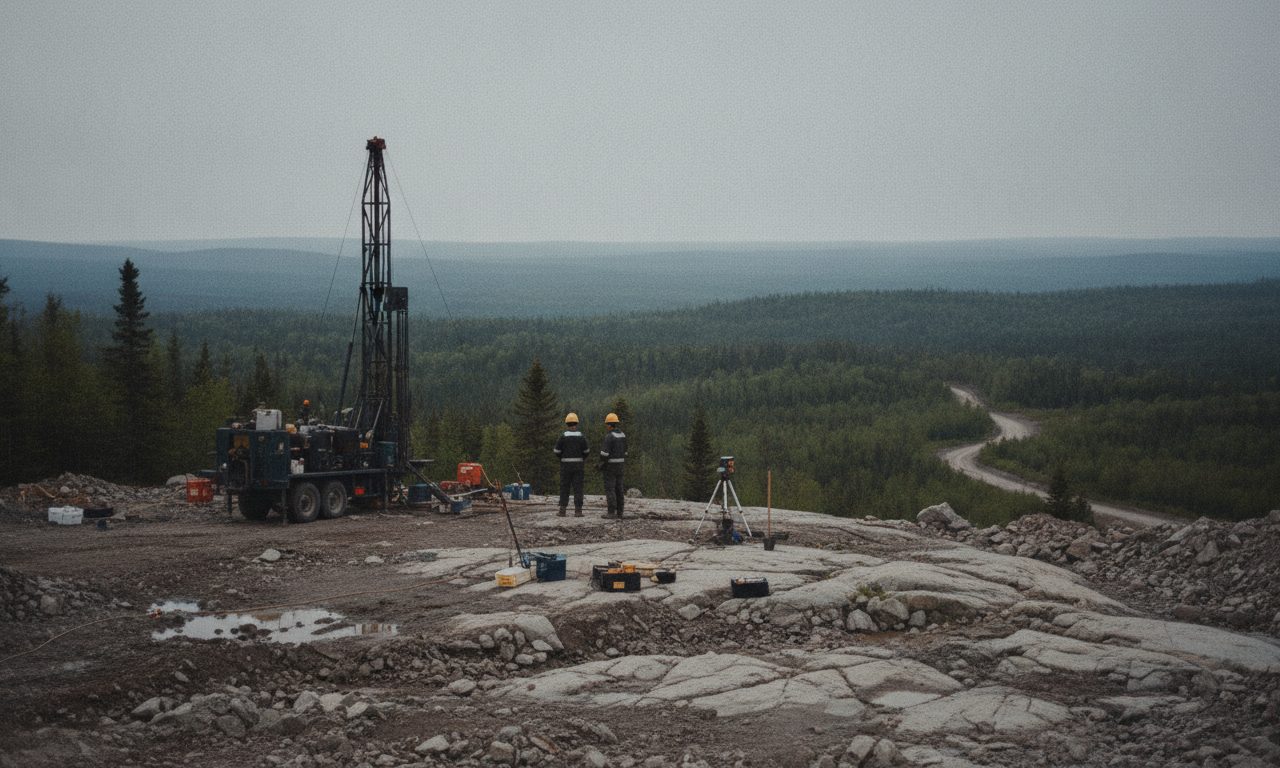
Despite provincial estimates pointing to 77 trillion cubic feet of shale gas across two known fields, experts emphasize that the true volume remaining underground remains unconfirmed. According to Dave Keighley, an earth sciences professor at the University of New Brunswick in Fredericton, determining the actual amount requires physical exploration. “The only way you find out is … dig or drill,” Keighley noted.
Generous geological criteria suggest a 10 to 50 per cent probability that target areas hold shale gas. Seismic testing conducted prior to the province’s exploration moratorium provided structural data regarding the depth and volume of shale rock, but exact gas figures cannot be calculated without drilling.
Geological Formations across New Brunswick
The province’s estimated deposits are concentrated in the south. The McCully Field near Sussex accounts for an estimated 67.3 trillion cubic feet, while the Stoney Creek Field near Hillsborough is estimated at 10.9 trillion cubic feet. By comparison, Alberta holds 3,455 trillion cubic feet. While shale formations stretch across a broad swath of New Brunswick from Bathurst down to Fredericton and east toward Sackville, the presence of rock does not guarantee energy deposits.
Hydrocarbons formed 350 million years ago during the Carboniferous period, when a vast marine environment covered southern New Brunswick. Microscopic organisms settled onto the ocean floor, forming layers that were buried beneath hundreds of metres of rock over millions of years. Increased temperatures subsequently transformed that organic matter into natural gas.
Southeastern Region Holds Highest Potential
Retired Natural Resources Canada geologist Denis Lavoie explained that gas presence depends directly on organic density and burial depth. In central and northern areas, older rock formations contain less organic material, making significant gas discoveries “minimal.” In contrast, southeastern New Brunswick features younger rock buried deep enough to transform organic matter into hydrocarbons.
“In some areas you have shale, but [it was] not buried deep enough, so the organic matter hasn’t been transformed, so you don’t have hydrocarbons in those shales,” Lavoie said. “So you have to have a good understanding of what is the quantity of organic matter in the rock and to which depth these rocks were buried.”
The provincial government is currently reviewing its 2014 moratorium on shale gas exploration, with a decision on whether to lift it scheduled by January 2027.



NB STORIES
A Proposed $3B Defence Complex Hits a Major Legal Roadblock in Northern New Brunswick
Montreal firm Blackpoint Industries is suing the Port of Belledune and its CEO, alleging a scuttled $3B agreement intended to bring 3,500 local jobs.
Legal Battle Erupts Over Proposed Multibillion-Dollar Development
A major commercial dispute has emerged in northern New Brunswick after Blackpoint Industries Inc. and executive Mario di Palma initiated legal proceedings against the Port of Belledune and CEO Denis Caron. The Montreal-based company filed a lawsuit on Oct. 5 in Bathurst’s Court of King’s Bench, asserting that actions by the port leadership torpedoed a project valued at more than $3 billion that could have brought as many as 3,500 jobs to economically quiet regions of the province.
None of the allegations raised in the French-language filing have been proven in court. Reached on Wednesday, Caron declined to comment, with a statement of defence anticipated in the coming days.
Disputed Terms and Unmet Timelines
According to court documents, the relationship began in late May during the CANSEC 2026 defence trade show in Ottawa, where port representatives suggested that their deep-water site could appeal to NATO nations and Canada’s Department of National Defence. Following a May 29 meeting at the port involving Blackpoint and Turkish defence contractor MKE, the parties executed a letter of intent on July 3. This was followed by a July 17 support letter signed by Caron granting an exclusive option period for planning and due diligence, while reserving the port’s right to finalize agreements and grant approvals.
The lawsuit states the proposed arrangement involved a 99-year lease for a building and roughly 230 acres of land for $1 annually, alongside a 10 per cent equity stake for the port in Blackpoint Canadian Strategic Holdings. Blackpoint intended to build an explosives manufacturing facility, set up a six-parcel military campus, and build a refinery for processing tungsten sourced from two prospective New Brunswick mines—the Sisson project and the Mount Pleasant site.
The plaintiffs contend that relying on these initial agreements, commitments were made to purchase Turkish assembly lines and efforts were initiated to secure $60 million in financing. However, the lawsuit states that on Sept. 3, Caron indicated the deal was still tentative, causing friction over the unsigned lease. On Sept. 7, Blackpoint emailed warnings regarding investor timelines, later describing the breakdown as completely unexpected and unexplained.
Sought Remedies and Local Context
Blackpoint is requesting that the court compel the port to execute the 99-year lease in exchange for the equity stake. Alternatively, the filing seeks a permanent injunction to prevent the port from using the property in ways that conflict with Blackpoint’s claimed rights, or monetary damages and legal costs.
The lawsuit makes no mention of another nearby project disclosed in late August by Canadian firm Nalagx and France’s Eurenco, which involves a proposed explosives plant on Crown land 20 kilometres west of the port. Premier Susan Holt recently noted that talks concerning that separate project remain ongoing and unfinalized.
NB STORIES
A Conservative Organizer Aims to Launch a New Centre-Right Movement in New Brunswick
A New Brunswick conservative volunteer is working to establish a new centre-right party following Daniel Allain’s PC leadership convention victory.

Organizers Pursue Registration for New Provincial Movement
Efforts are underway to establish a new centre-right political organization called The New Brunswick Party. Organizer Jason Purdy, a longtime conservative volunteer, announced the initiative following the election of Daniel Allain as leader of the Progressive Conservative Party of New Brunswick.
Elections NB spokesperson Paul Harpelle confirmed staff have answered inquiries regarding a potential new party, though no official registration documents have been submitted yet. Purdy indicated he intends to complete the necessary filings within roughly a month.
Targeting Strategic Byelections and Rural Voters
The movement’s immediate strategy involves running a candidate in an eventual legislative byelection required for Allain to win a seat. Purdy noted that the goal is either to secure the seat outright or split the vote to cause a loss, thereby prompting the Progressive Conservatives to re-evaluate their leadership. He specifically mentioned rural Anglophone voters as a primary focus for support.
Purdy’s proposed platform emphasizes fiscal accountability, responsible government, support for public healthcare alongside private options, legal abortion access, and parental rights in education. He criticized Allain’s platform as socially progressive and overly costly.
Party Leadership Distances Itself From Initiative
Progressive Conservative figures have publicly rejected the proposed breakaway effort. Allain expressed confidence in his party’s position, pointing to over 4,000 members who participated in the recent leadership vote, and stated he is not concerned about losing votes to a new group.
Other prominent party members have similarly maintained their alignment. Don Monahan stated he is 100 per cent committed to the party under Allain’s leadership and declined involvement. Progressive Conservative MLA Kris Austin confirmed Purdy remains a local riding director for now, but noted that Purdy cannot retain a director position on a PC board while building a competing political party.
NB STORIES
Why Calls for Mandatory Training for New Municipal Leaders Are Growing in New Brunswick
New Brunswick’s Local Governance Commission calls for mandatory training and free legal advice to support municipal leaders and avoid council conflicts.
Province Facing Calls for Mandatory Local Governance Training
New Brunswick’s Local Governance Commission has reiterated its demand for mandatory training for local elected officials in its latest annual report. The provincial government previously declined to implement a mandatory system, choosing instead to organize an optional two-day event in Saint John this past June.
The commission warned that the current voluntary approach fails to guarantee equal and consistent access to crucial information for all municipal leaders. It noted that standardized instruction could help prevent conflicts that have historically caused councils to disband or fall under provincial supervision.
Accessibility and Travel Costs Present Barriers for Smaller Communities
Attending in-person sessions poses significant financial and logistical challenges for resource-strapped towns. “We have communities that can’t afford lawn mowers or snow blowers,” said Union of Municipalities of New Brunswick president Brittany Merrifield, “and so it would be a real stretch for them to send an entire council to another municipality to stay for two or three days.”
Scheduling conflicts also kept some local leaders away. Grand Bay-Westfield’s mayor and six councillors were unable to attend the provincial training because it overlapped with their own pre-planned orientation. Merrifield explained, “[The province] booked their training the same weekend… We chose to attend our own because it had already been set up and we’d expended some resources to make sure that it was going to happen.”
Municipalities Seek Direct Legal and Technical Support
Provincial spokesperson Bruce Macfarlane reported that roughly 550 staff members and elected representatives attended the Saint John event. He stated that the department is reviewing the commission’s recommendations, remains open to offering guidance on request, and is scheduling additional training sessions for the fall.
Beyond formal instruction, advisory groups are pushing for free, specialized provincial assistance to interpret complex legislation like the Local Governance Act and the Regional Services Delivery Act. Dan Murphy, executive director of the municipal union, revealed that inquiries from local governments seeking advice rose by approximately 40 per cent over the past year. While experienced colleagues currently offer informal mentoring, Murphy emphasized that officials need direct support “from the people who own the legislation.”

Why the True Amount of Shale Gas in New Brunswick Remains Uncertain

Help Locate Stolen Vehicle: Black 2025 Honda CR-V Hybrid Missing from Ellis Street
Your Current 3 Day Forecast — October 24, 2026

Why Canada’s Bid for a Turkish Nuclear Deal Is Gaining Ground

A Proposed $3B Defence Complex Hits a Major Legal Roadblock in Northern New Brunswick
Your Current 3 Day Forecast — October 23, 2026

B.C. Supreme Court Grants Cowichan Tribes Title to Historic Richmond Lands and Fishing Rights

Vancouver Canucks Gear Up for a Make-or-Break 2025–26 Season

Land Title and Reconciliation: Canada Can’t Afford to Let Uncertainty Fester

Team B.C. Secures Margaret Todd Trophy at National Women’s Mid-Amateur Golf

Ottawa Unveils Build Canada Homes with $13B to Tackle Housing Crisis

Blue Jays Extend Win Streak, but Lose Bichette for Regular Season
-

 NB STORIES7 days ago
New Brunswick Progressive Conservatives to Reveal New Leader as Convention Concludes
-

 COMMUNITY5 days ago
The week ahead in Miramichi: Sun 18 — Sat 24 October
-

 NATIONAL STORIES7 days ago
Decades of Western Alienation Lead Albertans to Referendum on Canada’s Future
-
LOCAL5 days ago
Your Current 3 Day Forecast — October 19, 2026
-
COMMUNITY4 days ago
Redeployment of Primary Care Nurse Practitioners to Emergency Rooms Raises Safety Concerns in Northern New Brunswick
-
LOCAL6 days ago
Your Current 3 Day Forecast — October 18, 2026
-
NATIONAL STORIES6 days ago
Tragedy at CFB Wainwright frames last-minute calls for unity as Albertans prepare for referendum vote
-

 PUBLIC SAFETY7 days ago
U.S. Grand Jury Formally Charges Alleged Accomplice in Fatal Tumbler Ridge School Shooting