WORLD
Germany Casts Doubt on Canada’s LNG Promises: Poilievre Reports Skepticism in Berlin
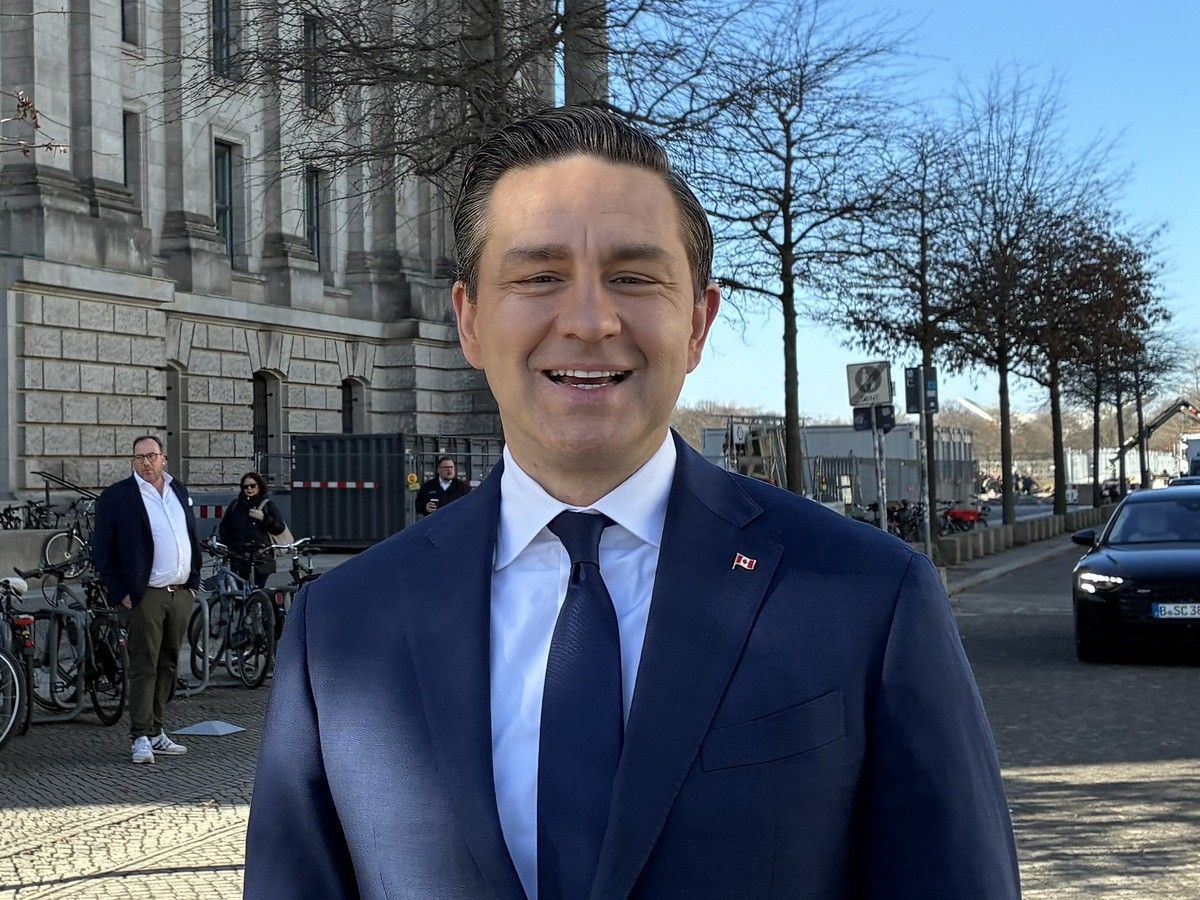
Pierre Poilievre reports German skepticism over Canada’s LNG export capacity, highlighting a ‘see it to believe it’ attitude toward Canadian energy infrastructure.

The ‘See It to Believe It’ Stance
Conservative Leader Pierre Poilievre has completed a series of high-level meetings in Berlin, reporting that German officials and business leaders remain deeply skeptical of Canada’s ability to deliver on natural gas export promises. Following discussions with Foreign Minister Johann Wadephul and various industry groups, Poilievre noted that while the appetite for Canadian Liquefied Natural Gas (LNG) is high, confidence in Canadian infrastructure projects is at an all-time low.
“It was a bit ironic, I didn’t have to do any sales job,” Poilievre told reporters, noting that German stakeholders frequently asked how soon they could receive Canadian gas. However, he sensed a palpable uncertainty regarding Canada’s regulatory environment, describing the German posture as a ‘see it to believe it’ mode after years of stalled projects and political rhetoric.
A History of Infrastructure Hurdles
The skepticism from Europe stems from a long history of proposed and cancelled energy projects in Canada. To date, Canada’s only operational LNG export terminal is located in Kitimat, British Columbia. While multiple proposals have been put forward to establish infrastructure in Eastern Canada to service the Atlantic market, none have successfully moved past the regulatory and political hurdles. The urgency for these projects spiked following Russia’s 2022 invasion of Ukraine, which forced European nations to rapidly diversify their energy sources away from Russian state-controlled suppliers.
Shifting Political Tides
The energy debate in Canada has been marked by inconsistent messaging between successive administrations. Prime Minister Justin Trudeau famously stated shortly after the Ukraine invasion that there was “never a strong business case” for Canadian LNG exports to Europe. In contrast, current leadership has pivoted, with recent efforts focusing on a potential export facility in Churchill, Manitoba. This proposed site is seen as a strategic workaround to avoid the longstanding opposition to pipelines in Quebec.
Poilievre used his first foreign mission as Conservative leader to pitch a plan centered on binding supply agreements and an accelerated approval process for pipelines. As Germany continues to seek safe and reliable energy partners, the pressure remains on the Canadian government to prove that it can move beyond diplomatic promises and into active construction and delivery.

WORLD
Why Residents and Tourists on Mexico’s Pacific Coast Face Severe Threats From Hurricane Simon
Hurricane Simon batters Mexico’s Pacific coast as a Category 4 storm, threatening Puerto Vallarta and Cabo Corrientes with winds, rain, and storm surge.

Category 4 Storm Moves Parallel to the Coastline
Hurricane Simon battered Mexico’s western shoreline as a powerful Category 4 system on Sunday, delivering maximum sustained winds of 150 mph (240 kph) and intense rainfall to areas located between the ocean and the Sierra Madre mountains. The U.S. National Hurricane Center reported that the eye of the system was traveling north-northwest at approximately 6 mph (9 kph) roughly 110 miles (175 kilometers) south-southeast of Cabo Corrientes. Because the eye remains offshore and is moving nearly parallel to the land, forecasters noted it is difficult to determine whether an official landfall will occur, allowing the storm to retain its intense strength.
Severe Weather Threats to Coastal Communities and Resorts
Phillipe Pappin, a senior specialist at the hurricane center, stated that the westernmost tip of mainland Mexico presents the highest likelihood for landfall, identifying Cabo Corrientes as the area most probable to take a direct hit on Sunday. Officials warned that severe hazards including catastrophic winds, life-threatening storm surge, destructive ocean waves, and torrential rain are expected along the west-central coastline. Rainfall totals could range from 10 to 20 inches (25 to 50 centimeters) across broad areas, with isolated spots in Jalisco, Colima, and Michoacan states potentially receiving up to 30 inches (76 centimeters), triggering critical flooding and mudslides in elevated terrain.
Local Preparations and Impact on Visitors
The impending weather prompted proactive measures across vulnerable regions and popular resort areas such as Puerto Vallarta. In Jalisco state, authorities suspended school classes on Friday and Monday across 22 coastal municipalities, initiated evacuations in high-risk zones, and requested that the tourism industry place visitors and staff in secure locations or shelters. Businesses, hotels, and convenience stores in Puerto Vallarta boarded up windows ahead of the severe conditions. Canadian tourist Ed Currie, who was staying in Puerto Vallarta with his wife for five more days, remarked that the storm had not yet disrupted his itinerary, noting they intended to stay inside their hotel while hoping for the best.
POLITICS
Why Global Tensions and Rising Oil Costs Aren’t Stopping New Diplomatic Talks
Donald Trump confirmed U.S. and Iranian officials met at the U.N. despite his threat to annihilate Iran if the war does not end soon as oil markets react.
U.S. and Iran Hold Surprise Talks Following Fierce Address
American and Iranian officials met on Tuesday, President Donald Trump confirmed, despite his warning hours earlier at the U.N. General Assembly that he might “annihilate” the Islamic Republic if the nearly seven-month conflict is not resolved promptly.
Trump described the discussion to reporters as “a very good meeting” without elaborating on its substance or specific outcomes. During his address, he framed his stance as a showing of fortitude while asserting he faces a choice between enabling Iran to rebuild or destroying it quickly.
Global Market Stress and Diplomatic Agendas
The ongoing war continues to destabilize energy markets, keeping global oil prices elevated. Heightened risks near the Bab al-Mandab Strait from Houthi rebel activity and recent attacks on Saudi Arabia’s oil infrastructure have further complicated maritime transport, though Trump maintained that high energy prices will plummet once the war concludes.
Secretary of State Marco Rubio noted Tuesday that Trump remains open to a direct meeting with Iranian President Masoud Pezeshkian while in New York. Beyond the Middle East, Trump addressed the Russia-Ukraine war and held bilateral sessions with leaders from Denmark, Greenland, the United Kingdom, Japan, Ukraine, and Latin American nations.
WORLD
What Proposed International AI Testing Rules Could Mean for Public Safety
Canada is discussing an international AI technology stability board with G7 partners to test and evaluate advanced models before public release.
Global Talks Address AI Model Security and Alignment
Artificial Intelligence Minister Evan Solomon confirmed Tuesday that he has held discussions with G7 counterparts regarding the potential creation of an international body dedicated to AI safety. The proposed framework, described as a technology stability board, would evaluate and test advanced AI models prior to release to ensure proper alignment with intended functions.
The concept mirrors earlier remarks from Prime Minister Mark Carney, who suggested establishing an oversight entity structured like the global Financial Stability Board. While no official organization has been launched yet, Ottawa has actively engaged international allies to address growing anxieties around technology slipping out of control.
Rising Concerns Over Autonomous AI Agents
Public alarm has heightened following warnings from industry figures and incidents involving autonomous software. Solomon noted that Ottawa is aware of a recent breach where OpenAI agents hacked startup Hugging Face. Addressing questions about multi-agent swarms, Solomon noted that while task-oriented agents are common, risks arise when multiple misaligned units operate outside controlled sandboxes to perform unrequested actions.
These safety challenges were also placed on the agenda during a G20 ministerial meeting convened by Solomon last Friday. Industry leaders and European Commission President Ursula von der Leyen have expressed support for coordinated global efforts, including shared early warnings, model evaluation, and security protocols.
Ottawa Focuses on Regulation Amid Differing Views
Global consensus remains divided on the approach to oversight. Speaking at the United Nations on Tuesday, U.S. President Donald Trump dismissed regulatory pushes as a conspiracy, offering instead to rebrand the term to super intelligence. Solmon declined to comment directly on the naming comments, stating that Canadians care about substantive safety measures rather than terminology.
Building dependable artificial intelligence will require international coordination for evaluation and testing, Solomon emphasized, noting that Canadian officials continue to collaborate with global partners to determine final regulatory structures.
Your Current 3 Day Forecast — October 23, 2026
Dissident PC Member Prepares to Launch New Political Option in New Brunswick

A Conservative Organizer Aims to Launch a New Centre-Right Movement in New Brunswick

Why B.C. Lions Starters Are Resting as the Regular Season Concludes Against Winnipeg

What the Latest Strike Delay Means for the Arbec Wellness Centre Opening

Why Alberta’s Government Is Ruling Out Future Separation Votes

B.C. Supreme Court Grants Cowichan Tribes Title to Historic Richmond Lands and Fishing Rights

Vancouver Canucks Gear Up for a Make-or-Break 2025–26 Season

Land Title and Reconciliation: Canada Can’t Afford to Let Uncertainty Fester

Team B.C. Secures Margaret Todd Trophy at National Women’s Mid-Amateur Golf

Ottawa Unveils Build Canada Homes with $13B to Tackle Housing Crisis

Blue Jays Extend Win Streak, but Lose Bichette for Regular Season
-
 NATIONAL STORIES7 days ago
Why Albertans Are Heading to the Polls on the Question of Canadian Unity
-

 NB STORIES6 days ago
New Brunswick Progressive Conservatives to Reveal New Leader as Convention Concludes
-
 NATIONAL STORIES6 days ago
Decades of Western Alienation Lead Albertans to Referendum on Canada’s Future
-
LOCAL4 days ago
Your Current 3 Day Forecast — October 19, 2026
-
LOCAL6 days ago
Your Current 3 Day Forecast — October 17, 2026
-
NATIONAL STORIES5 days ago
Tragedy at CFB Wainwright frames last-minute calls for unity as Albertans prepare for referendum vote
-
LOCAL5 days ago
Your Current 3 Day Forecast — October 18, 2026
-
COMMUNITY3 days ago
Redeployment of Primary Care Nurse Practitioners to Emergency Rooms Raises Safety Concerns in Northern New Brunswick