General
Historic Reach: Colonel Jeremy Hansen Conducts Canada’s First Deep Space Video Call
Colonel Jeremy Hansen makes history with the first live deep space video call from the Artemis II mission, sharing views of the moon and advice for Canadians.


A New Era for Canadian Space Exploration
In a landmark moment for the Canadian Space Agency (CSA), Colonel Jeremy Hansen has successfully conducted the first-ever live video call from deep space back to Earth. As a mission specialist on NASA’s Artemis II, Hansen connected with audiences from the Orion spacecraft while positioned approximately three days into a historic 10-day lunar flyby mission. The event, hosted by CSA President Lisa Campbell, represents a significant technological and symbolic achievement for Canada’s role in international space exploration.
Living the Dream: First Impressions from Orion
During the live broadcast, Hansen shared his firsthand experiences of the journey, emphasizing the profound difference between years of ground-based training and the reality of spaceflight. When asked about the most surprising aspect of the mission so far, Hansen remarked that while simulations are rigorous, ‘riding the rocket’ felt entirely different in real life. He also expressed awe at the visual perspective afforded to the crew, describing the views of the ‘crescent Earth’ as truly incredible. The mission, which launched on April 1, marks the first time a crewed vessel has circled the moon in over half a century.
Scientific Milestones and Global Collaboration
Hansen is part of a four-person international crew alongside NASA astronauts Reid Wiseman, Victor Glover, and Christina Koch. Beyond the technical challenges of the lunar orbit, Hansen highlighted a unique scientific objective planned for the mission’s transit: observing a solar eclipse from behind the moon. This rare perspective is expected to provide valuable data for researchers while offering the crew a sight few humans have ever witnessed. This mission serves as a critical test of the systems required for future sustained human presence on the lunar surface and eventual travel to Mars.
Inspiring the Next Generation
Addressing young Canadians watching from below, Hansen offered words of encouragement, urging them to pursue their passions and seek community support. ‘It’s important that you find what you’re passionate about, but that you share those passions with others because you’re gonna find that they’re going to help you achieve them,’ he stated. With more live communications scheduled as Orion continues its journey around the moon, the CSA aims to keep the public engaged with this historic chapter of Canadian space history.

COMMUNITY
Community Connection Brews in New Brunswick Through Unique Coffee Mug Library
Discover how a coffee mug library on Patricia Avenue is bringing the Riverview, N.B. community together through a unique ‘take one, leave one’ exchange.


A New Twist on Neighborhood Sharing
In the quiet neighborhood of Riverview, New Brunswick, a new community initiative is proving that you don’t need books to start a conversation. While little free libraries have become a staple of suburban landscapes, Kayla Stauffer has introduced a creative alternative: the city’s first little coffee mug exchange. Located on Patricia Avenue, the exchange operates on a simple ‘take one, leave one’ philosophy that has quickly captured the hearts of local residents.
From Social Media Idea to Local Sensation
Stauffer inspired the project after seeing a similar concept on social media. What began as a modest attempt to foster community spirit has blossomed into a local phenomenon. Since her husband installed the handmade wooden exchange stand just over a week ago, Stauffer estimates that more than 100 mugs have already changed hands. The structure itself was a Christmas gift from her husband, though not everyone in the family was initially convinced of its potential success.
Wes Stauffer, Kayla’s father-in-law, admits he was a skeptic when the idea was first proposed. ‘I said, “This isn’t going to work. People aren’t going to be interested in this,”’ Wes recalled. However, after seeing the constant rotation of ceramics—often different from morning to evening—he has become one of its biggest supporters. He notes that the project has succeeded in its primary goal: making people feel good and spreading kindness throughout the neighborhood.
Building Bonds Over Ceramic and Caffeine
The impact on the Patricia Avenue community has been immediate. Neighbor Carrie Dollard, a self-described coffee fanatic, says she now slows down every day just to peek at the new arrivals. The exchange has become a hub for social interaction, where neighbors stop to chat and share the stories behind the mugs they are donating. Some participants have even begun leaving positive notes tucked inside the mugs for the next person to find.
For Kayla Stauffer, the exchange offers a way to appreciate unique pottery without cluttering her own kitchen cabinets. ‘I can still see the cool ones and not have our shelves full of them,’ she joked. With the overwhelmingly positive response on social media and in person, the family plans to keep the library running through the holiday season, with expectations that a festive themed swap will help spread even more cheer as winter approaches.
Finance
Bank of Canada Holds Rates Steady at 2.25% Amid Geopolitical Oil Volatility
The Bank of Canada holds its key interest rate at 2.25%, balancing economic recovery confidence against inflation risks from global energy market volatility.

Central Bank Maintains Status Quo Amid Economic Recovery
The Bank of Canada announced on Wednesday that it will maintain its benchmark interest rate at 2.25 per cent for the sixth consecutive time. The decision, which aligns with broad economist expectations, reflects a growing confidence within the central bank that the domestic economy is successfully navigating a series of recent headwinds, including a surprising contraction at the beginning of the year.
Navigating the Impact of Global Conflict
Bank of Canada Governor Tiff Macklem addressed the ongoing uncertainty stemming from the conflict in Iran, which has sent global energy prices soaring. While inflation reached 3.2 per cent in May primarily due to gasoline costs, the bank remains optimistic that these spikes have not yet broadly permeated the consumer basket. However, Macklem warned that the governing council remains vigilant. Should supply chain bottlenecks in the Strait of Hormuz persist or energy prices remain elevated, the bank is prepared to implement further rate hikes to prevent inflation from becoming entrenched.
Forecast for Growth and Resilience
Despite a sluggish start to 2026 marked by slowing population growth and trade tariffs, the bank’s updated monetary policy report projects a second-quarter growth rebound of 2.5 per cent. This recovery is expected to be driven by a stabilization in the housing market, consumer resilience, and a notable momentum in exports to the United States. Macklem noted that Canadian businesses are proving adaptable, reconfiguring supply chains to maintain operations despite global instability.
The Long Road to Two Per Cent Inflation
The central bank anticipates that the knock-on effects of Middle Eastern hostilities will continue to influence grocery and fuel prices through early 2027. While a weak Canadian dollar may drive up the cost of imported goods, economists from CIBC suggest that there is still significant slack in the economy. This output gap supports the current projection that rates will likely remain on hold for the remainder of 2026 as the bank strikes a delicate balance between supporting recovery and curbing persistent price pressures.
Astronomy
Celestial Spectacle: Rare ‘Blaze Star’ Explosion Predicted to Appear in the Night Sky
T Coronae Borealis is set for a rare nova explosion. Learn how to spot this ‘Blaze Star’ as it brightens to rival the North Star in a once-in-a-lifetime event.
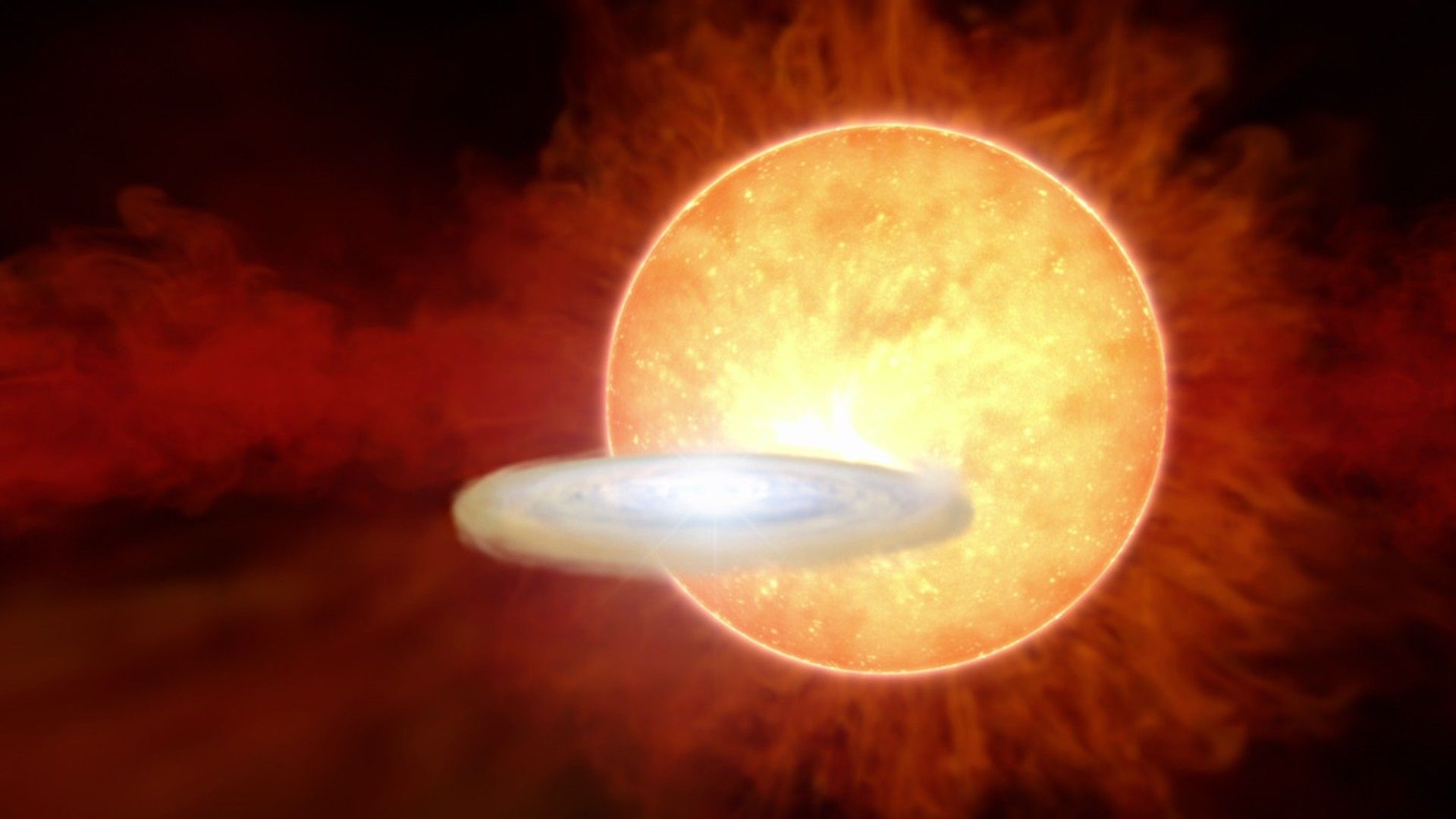
A Once-in-a-Lifetime Cosmic Event
Astronomers and stargazers alike are on high alert for a rare celestial phenomenon: the sudden appearance of a ‘new’ star in the night sky. The star system T Coronae Borealis, commonly known as the ‘Blaze Star,’ is expected to undergo a cataclysmic thermonuclear eruption at any moment. This event, known as a recurring nova, occurs approximately once every 80 years, making it a once-in-a-lifetime viewing opportunity for most people on Earth.
The Science Behind the Blast
T Coronae Borealis (T CrB) is a binary system located 3,000 light-years away, consisting of a white dwarf and a red giant. In a ‘vampiric’ relationship, the white dwarf continuously strips hydrogen-rich material from its larger companion. Once this material reaches a critical mass on the white dwarf’s surface, it triggers a massive thermonuclear explosion. Unlike a supernova, which marks the death of a star, this nova leaves the white dwarf intact to begin the cycle of feeding and erupting all over again.
When and How to Watch
While the exact timing remains elusive, NASA scientists and astrophysicists believe the eruption is imminent. Historically, the system follows an 80-year cycle, with the last major event occurring in 1946. When the nova finally ignites, T CrB will jump from its usual invisible magnitude of +10 to a magnitude of +2. This surge will make it as bright as Polaris, the North Star, and easily visible to the naked eye even in areas with moderate light pollution.
Finding the Northern Crown
To witness this fleeting event, observers should look toward the constellation Corona Borealis, or the ‘Northern Crown.’ This small, semicircular cluster of stars sits between the constellations Hercules and Bootes. Once the eruption begins, the ‘Blaze Star’ will remain visible to the naked eye for less than a week before fading back into obscurity for another eight decades. Astronomers recommend using binoculars or a small telescope now to familiarize yourself with the region of the sky just one degree to the lower right of the star Epsilon Coronae Borealis.
Your Current 3 Day Forecast — October 23, 2026
Dissident PC Member Prepares to Launch New Political Option in New Brunswick

A Conservative Organizer Aims to Launch a New Centre-Right Movement in New Brunswick

Why B.C. Lions Starters Are Resting as the Regular Season Concludes Against Winnipeg

What the Latest Strike Delay Means for the Arbec Wellness Centre Opening

Why Alberta’s Government Is Ruling Out Future Separation Votes

B.C. Supreme Court Grants Cowichan Tribes Title to Historic Richmond Lands and Fishing Rights

Vancouver Canucks Gear Up for a Make-or-Break 2025–26 Season

Land Title and Reconciliation: Canada Can’t Afford to Let Uncertainty Fester

Team B.C. Secures Margaret Todd Trophy at National Women’s Mid-Amateur Golf

Ottawa Unveils Build Canada Homes with $13B to Tackle Housing Crisis

Blue Jays Extend Win Streak, but Lose Bichette for Regular Season
-

 NATIONAL STORIES7 days ago
Why Albertans Are Heading to the Polls on the Question of Canadian Unity
-

 NB STORIES6 days ago
New Brunswick Progressive Conservatives to Reveal New Leader as Convention Concludes
-

 NATIONAL STORIES6 days ago
Decades of Western Alienation Lead Albertans to Referendum on Canada’s Future
-
LOCAL4 days ago
Your Current 3 Day Forecast — October 19, 2026
-
LOCAL6 days ago
Your Current 3 Day Forecast — October 17, 2026
-
NATIONAL STORIES5 days ago
Tragedy at CFB Wainwright frames last-minute calls for unity as Albertans prepare for referendum vote
-
LOCAL5 days ago
Your Current 3 Day Forecast — October 18, 2026
-
COMMUNITY3 days ago
Redeployment of Primary Care Nurse Practitioners to Emergency Rooms Raises Safety Concerns in Northern New Brunswick