business
Severance Showdown: Bell Canada Employees Allege Falsified Records Firing is ‘Money-Saving’ Tactic
Bell Canada faces legal backlash as fired employees claim the company used attendance ‘misconduct’ as a pretext to avoid paying severance during downsizing.


The Controversy Over Workplace Presence
A growing legal battle is brewing between Canadian telecom giant BCE and former employees of its subsidiary, Bell Canada. The company has terminated a number of workers, alleging they falsified attendance records by misrepresenting their physical presence in the office. According to an internal memo from Chief Human Resources Officer Nikki Moffat, some staff members were accused of ‘swiping in and leaving shortly after’ to bypass return-to-office mandates.
Employees Dispute Misconduct Allegations
Despite the company’s firm stance, many terminated workers are fighting back, claiming they were never required to work from the office in the first place. Employment lawyer Jean-Alexandre De Bousquet, who represents over 30 former Bell employees, asserts that many of his clients were hired as remote workers over a decade ago and had never worked in a physical office. De Bousquet describes the enforcement of these policies as a ‘unilateral change’ by Bell that ignores years of established work arrangements.
Allegations of Avoiding Severance Pay
Central to the dispute is the motivation behind these dismissals. While Bell maintains that the terminations followed thorough investigations into code-of-conduct violations, former staff and their legal counsel suggest a more financial motive. By firing employees for ‘just cause,’ the company avoids paying out substantial severance packages. This move comes on the heels of major job cuts in late 2025, leading critics to believe the current terminations are a strategic effort to reduce costs amid fluctuating profits and mounting debt.
The High Bar of ‘Just Cause’
Legal experts note that terminating an employee for just cause is often referred to as the ‘capital punishment’ of employment law. Under Canadian law, employers typically must provide warnings and opportunities for improvement before dismissal. While falsifying records can meet the threshold for immediate termination, the fact that some managers allegedly condoned ‘swipe-and-go’ behavior complicates Bell’s legal position. As federal and private sector workers across Canada face stricter return-to-office mandates, this case serves as a high-stakes test for the future of remote work rights.



business
Mark Carney Defends Gordie Howe Bridge Revenue Split Amid ‘Capitulation’ Accusations
Prime Minister Mark Carney defends the new Gordie Howe Bridge revenue deal with the U.S. amid criticism of capitulation to the Trump administration.

A Contentious Opening for Canada’s Newest Border Link
Prime Minister Mark Carney is pushing back against growing criticism over a revised revenue-sharing agreement for the Gordie Howe International Bridge. Speaking from the Calgary Stampede on Sunday, Carney defended the deal as a necessary step for economic expansion, despite accusations from political opponents that the government caved to pressure from the Trump administration.
The $6.4-billion bridge, which connects Windsor, Ontario, with Detroit, Michigan, is officially scheduled to open on July 27. The project was entirely funded by Canada, and under the original 2012 agreement, Canada was slated to collect all toll revenues until its construction costs were fully recouped. However, the new terms include a profit-sharing mechanism with the United States that has sparked a domestic political firestorm.
The ‘Net’ Revenue Defense
Addressing the revised financial structure, Carney emphasized that Canada will still prioritize debt recovery. “The word ‘net’ does a lot of work in this,” Carney told CTV. “We get the revenues. Then the servicing of the costs of the bridge and paying the debt of the bridge, and then what’s left over, there’s a split of that for 15 years.”
Carney argued that the funds allocated to an economic development fund on the U.S. side would ultimately benefit Canada by driving more traffic to the crossing. He dismissed the idea that Canada was losing out, asserting that after costs are covered, there would likely be very little “net” profit left to split, making it a “good deal for Canada” in the long term.
Political Backlash and Trump’s Influence
The deal has been met with sharp condemnation from Conservative MPs. Andrew Lawton labeled the agreement a “capitulation,” while Calgary Heritage MP Shuv Majumdar called it a “terrible deal,” demanding the full release of the agreement’s text before the bridge opens. Critics point to the timing of the renegotiation, which followed public threats from Donald Trump to block the bridge’s opening unless the U.S. was “fully compensated.”
While Trump took to Truth Social to claim credit for securing a “MUCH BETTER DEAL” for America, the Carney government maintains that the priority was ensuring the vital trade artery opened without further delay. The bridge serves as a critical link for the North American supply chain, and officials argue that the economic cost of a blocked border would far outweigh the concessions made in the revenue split.
business
Gordie Howe Bridge Set for July 27 Launch Following Major U.S.-Canada Revenue Renegotiation
The Gordie Howe International Bridge will open July 27 following a new revenue-sharing deal between Canada and the U.S. affecting toll profits and governance.
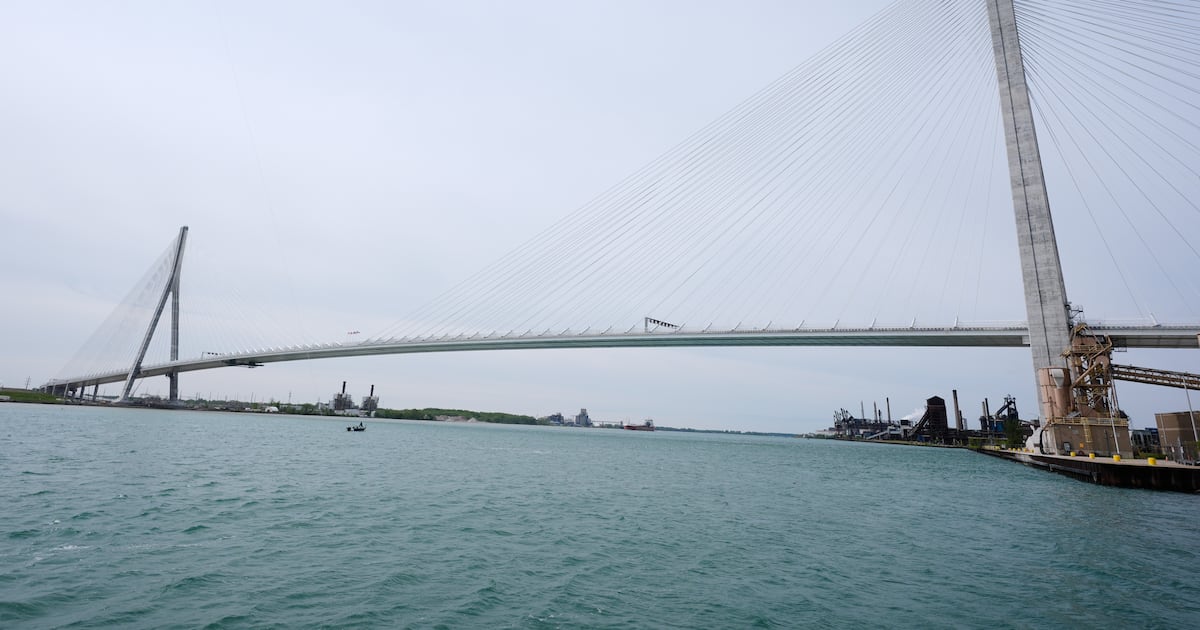
A New Era for North American Trade
After months of anticipation and high-stakes diplomatic maneuvering, the Gordie Howe International Bridge is officially scheduled to open to traffic on July 27. Housing, Communities and Infrastructure Canada confirmed the late-July launch on Friday, marking a pivotal moment for the busiest trade corridor in North America. The new cable-stayed bridge, which connects Windsor, Ontario, to Detroit, Michigan, is expected to provide critical relief to the aging Ambassador Bridge and streamline logistics for the thousands of businesses that rely on the crossing daily.
The Cost of Diplomacy: Revenue Sharing Shifts
While the opening date provides certainty for the region, it comes at a significant financial cost to Canada. Under the original 2012 Canada-Michigan Crossing Agreement, Canada agreed to front the entire $6.4 billion construction cost. In exchange, Canada was slated to collect 100 per cent of all toll profits until the investment was fully recouped—a process estimated to take approximately 50 years. However, the new terms announced Friday reveal a major concession: Canada will now receive only 50 per cent of toll profits for the first 15 years.
The remaining 50 per cent of revenue will be diverted into a newly established economic development fund. Furthermore, the Canadian government has agreed to a oversight mechanism where the United States must approve any toll changes that exceed 10 per cent or fall below regional averages. These adjustments follow intense public pressure from U.S. political figures, including Donald Trump, who recently characterized the original deal as unfair to American interests.
A Catalyst for Economic Growth
Despite the revenue concessions, officials on both sides of the border emphasize the long-term benefits of the project. The bridge features six lanes—three in each direction—and will rank among the five longest bridges on the continent. Beyond easing commuter congestion, the infrastructure is designed to bolster the automotive supply chain and support the rapid movement of goods between the two nations. As the ribbon-cutting ceremony nears, the Gordie Howe International Bridge stands as both a feat of modern engineering and a symbol of the complex, evolving economic partnership between Canada and the United States.
business
Markets Outlook: Trump Economic Forecasts, Fed Speculation, and Surging Prediction Volumes
Explore Monday’s market outlook featuring Trump’s economic interviews, surging prediction market volumes, and upcoming Fed minutes and corporate earnings.

Mixed Market Open Following Historic Highs
Wall Street is bracing for a complex start to the week as stock futures show mixed movement on Monday morning. This cautious positioning comes on the heels of a triumphant week for equities, during which the Dow Jones Industrial Average reached a new all-time high. Investors are currently weighing a cooling labor market against the potential for shifting Federal Reserve policy, particularly after Thursday’s weaker-than-expected jobs report fueled optimism that interest rate hikes may finally be off the table.
Trump Discusses Economic Vision and AI Superiority
In a wide-ranging exclusive interview with CNBC, former President Donald Trump outlined a bold economic agenda ahead of the nation’s 250th anniversary. Trump emphasized a push for domestic independence in the semiconductor industry, stating he expects 40% to 60% of chip manufacturing to be based in the U.S. by the end of a potential second term. Furthermore, he labeled Artificial Intelligence as a technological shift “bigger than the internet,” asserting that the U.S. currently maintains a critical lead. Notably, Trump suggested the U.S. GDP should ideally sit between 12% and 13%, a target significantly higher than historical averages.
The Rise of Prediction Markets and Sports Diplomacy
The FIFA World Cup is driving unprecedented volume into prediction market platforms. Notional volume on Kalshi surged over 70% in June to exceed $31 billion, while Polymarket set a new record with over $10.8 billion in monthly volume. This surge in speculative interest coincides with high-stakes sports drama, as FIFA recently reversed a suspension for U.S. Men’s National Team striker Folarin Balogun following reports that Trump requested a review of the decision. Balogun is expected to play in today’s critical knockout match against Belgium.
Strategic Shifts in Consumer Behavior
Corporate earnings and consumer trends are also in focus this week. The Museum of American Finance has debuted its new Boston headquarters, featuring an AI-generated Alexander Hamilton, signaling a merger of historical education and modern tech. Meanwhile, the travel industry is seeing a shift away from the traditional “Eurosummer” as Americans increasingly opt for fall travel to avoid extreme heat waves and peak pricing. Investors will be monitoring this trend as Delta Air Lines, PepsiCo, and Levi Strauss prepare to report quarterly results later this week.
Your Current 3 Day Forecast — October 23, 2026
Dissident PC Member Prepares to Launch New Political Option in New Brunswick

A Conservative Organizer Aims to Launch a New Centre-Right Movement in New Brunswick

Why B.C. Lions Starters Are Resting as the Regular Season Concludes Against Winnipeg

What the Latest Strike Delay Means for the Arbec Wellness Centre Opening

Why Alberta’s Government Is Ruling Out Future Separation Votes

B.C. Supreme Court Grants Cowichan Tribes Title to Historic Richmond Lands and Fishing Rights

Vancouver Canucks Gear Up for a Make-or-Break 2025–26 Season

Land Title and Reconciliation: Canada Can’t Afford to Let Uncertainty Fester

Team B.C. Secures Margaret Todd Trophy at National Women’s Mid-Amateur Golf

Ottawa Unveils Build Canada Homes with $13B to Tackle Housing Crisis

Blue Jays Extend Win Streak, but Lose Bichette for Regular Season
-

 NATIONAL STORIES7 days ago
Why Albertans Are Heading to the Polls on the Question of Canadian Unity
-

 NB STORIES6 days ago
New Brunswick Progressive Conservatives to Reveal New Leader as Convention Concludes
-

 NATIONAL STORIES6 days ago
Decades of Western Alienation Lead Albertans to Referendum on Canada’s Future
-
LOCAL4 days ago
Your Current 3 Day Forecast — October 19, 2026
-
LOCAL6 days ago
Your Current 3 Day Forecast — October 17, 2026
-
NATIONAL STORIES5 days ago
Tragedy at CFB Wainwright frames last-minute calls for unity as Albertans prepare for referendum vote
-
LOCAL5 days ago
Your Current 3 Day Forecast — October 18, 2026
-
NB STORIES4 days ago
Why Calls for Mandatory Training for New Municipal Leaders Are Growing in New Brunswick