NATIONAL STORIES
What Ottawa’s Plan for Airport Private Investment Means for Passengers and Infrastructure
Prime Minister Mark Carney announces plans to seek private investment for four major Canadian airports while retaining public land ownership.


Ottawa Targets Private Capital for Major Aviation Hubs
The federal government intends to invite private investors into four of Canada’s busiest airports through long-term concessions, Prime Minister Mark Carney revealed at the Canada Investment Summit in Toronto. The initiative targets Vancouver International Airport, Toronto Pearson International Airport, Trudeau International Airport in Montreal, and Calgary International Airport.
While private capital will be brought in to manage and expand operations, the federal government plans to retain ownership of the underlying land and assets. Carney stated that funds generated from these concessions, estimated in the tens of billions of dollars, will be channeled into next-generation infrastructure projects nationwide.
Financing Infrastructure and Learning from Overseas
The announcement comes as Ottawa seeks to attract $1 trillion in total investments across 167 projects over the next five years, bringing together more than 100 global institutional investors, including major pension funds. Carney noted that Canadian pension managers already hold stakes in overseas airports, suggesting it is time to deploy that operational expertise domestically.
Addressing potential risks, Carney acknowledged that Canada is entering private airport investment after observing mixed results in other countries, allowing officials to apply those practical lessons. McGill University aviation lecturer John Gradek noted that private capital offers an alternative to bond markets or passenger fees for funding overdue facility upgrades.
Lease Arrangements and Timeline Constraints
Currently, Ottawa owns approximately two dozen large airports and leases them to non-profit entities, generating $525 million annually in lease payments. A Transport Canada memo obtained via access to information indicated that extending these existing leases is crucial for securing private commitments, though administrative delays could push final negotiations into 2027 if decisions are not finalized promptly.






NATIONAL STORIES
Why Alberta’s Government Is Ruling Out Future Separation Votes
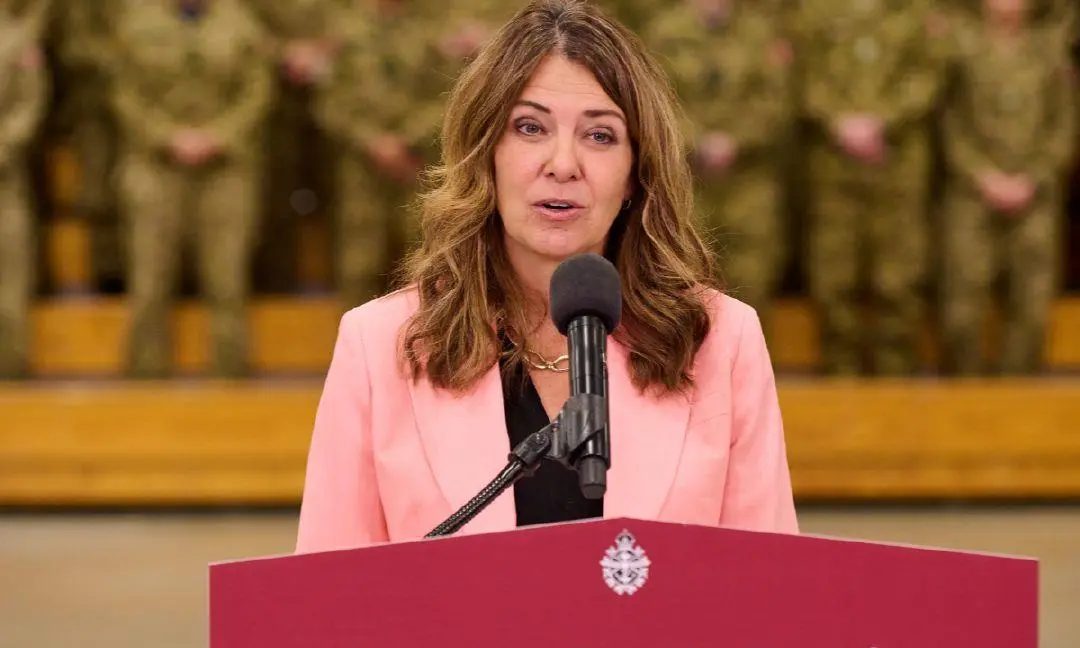
Premier Danielle Smith says Alberta won’t hold another separation referendum after over 75 per cent of voters chose to stay in Canada during a province-wide vote.
Premier Smith Rules Out Further Separatist Ballots
Following a provincial vote on Oct. 19 where over 75 per cent of voters chose to remain in Canada, Premier Danielle Smith announced on Tuesday, Oct. 20, that no further referendums on separation will occur during her tenure. Smith stated that the result provides her government with a clear mandate to stay a Canadian province while continuing to push for provincial autonomy within the national constitutional framework.
Disputes to Be Settled Within Canadian Legal System
Addressing the public, Smith emphasized that future disagreements with Ottawa will be handled through political and legal avenues rather than secession. She noted that while constitutional battles remain, key federal political parties now show strong support for Alberta’s major economic sectors. Smith also highlighted that the referendum directed her administration to pursue greater provincial authority over immigration, focus on jobs for Canadians, mandate contributions from temporary residents for public services, and require proof of citizenship to vote.
Opposition Raises Concerns Over Costs and Priorities
Alberta NDP leader Naheed Nenshi criticized the premier’s approach prior to her address, arguing that Smith spent nearly $200 million in taxpayer funds on the referendum exercise, including $4 million spent directly to sway voters. Nenshi stated that the public is frustrated with issues such as the cost of living, employment, public education, and healthcare, claiming the premier’s actions catered to separatists rather than addressing core public priorities.
NATIONAL STORIES
Highland Valley Copper Workers Could Strike Saturday as Union Issues Notice
United Steelworkers Local 7619 has issued a 72-hour strike notice at Teck’s Highland Valley Copper mine near Logan Lake, B.C. Work stoppage could start Saturday.
Labour Dispute Hits Highland Valley Copper Site
A strike could begin as soon as 8 a.m. on Saturday at the Highland Valley Copper operation near Logan Lake, B.C., following a 72-hour strike notice issued by United Steelworkers Local 7619.
Representing approximately 1,200 workers at the mine, the union announced the step after talks with the site’s operator failed to produce a fair collective agreement.
Staffing and Wage Concerns Prompt Action
Local 7619 stated that it presented proposals aimed at addressing staff shortages, raising wages, and improving pensions. According to the union, these measures are necessary to ensure the mine remains a competitive employer within the expanding B.C. mining sector and to fix ongoing issues attracting and retaining skilled tradespeople.
Mine operator Teck Resources Ltd. confirmed it has developed a contingency plan designed to maintain environmental management and safety standards in the event of a strike. The company expressed its commitment to securing a fair and reasonable collective agreement that preserves the long-term viability of the operation.
Broader Corporate Context
The job action notice arrives while Teck and Anglo American PLC work to finalize a multibillion-dollar merger agreement originally announced last year.
NATIONAL STORIES
Tragedy at CFB Wainwright frames last-minute calls for unity as Albertans prepare for referendum vote
Pro-unity rally organizers and political leaders urge unity following a fatal fire at CFB Wainwright as Albertans prepare to vote in a historic referendum.
Tragedy Overshadows Final Day of Referendum Campaigning
On the eve of a historic provincial vote, a deadly blaze at CFB Wainwright hung heavy over political gatherings in Alberta. Four military members died and dozens suffered serious injuries following a violent fire at the expansive military training facility located roughly 200 kilometres southeast of Edmonton.
Gathering at the Alberta legislature on Sunday, pro-unity demonstrators waved Canadian flags attached to hockey sticks and held signs opposing Premier Danielle Smith’s referendum. The rally, organized by the Alberta Federation of Labour, occurred a day after independence supporters gathered at the same site displaying blue Alberta flags.
Leaders Emphasize Unity in Wake of Military Base Fire
Addressing the crowd at the provincial legislature, Forever Canadian leader Thomas Lukaszuk acknowledged the difficulty of holding a rally under such circumstances, while highlighting that the sacrifices of military members afford citizens the privilege to demonstrate. Alberta Federation of Labour leader Gil McGowan directed a moment of silence for those affected and first responders, noting that Canadians stepped up to assist without regard for the ongoing political debate.
Union leaders representing provincial workers and nurses also spoke to the crowd, framing the response to the Wainwright tragedy as a testament to the importance of solidarity across the province and nation. At a news conference addressing the military base fire, Premier Danielle Smith noted Alberta’s long history of supporting the armed forces and confirmed the province is assisting with medical care for the injured personnel.
Voters Head to the Polls After Intensive Campaigning
Voting opens Monday from 9 a.m. to 8 p.m. across Alberta, with electors deciding whether the province should remain in Canada or trigger a second, binding referendum on separation. Early turnout indicates high engagement, with Elections Alberta reporting that over 1.3 million of the approximately 3.1 million eligible voters have already cast advance or mail-in ballots.
The ballot features ten total questions. In addition to the separation item, nine questions posed by Premier Smith seek mandates regarding immigration oversight and constitutional shifts from Ottawa. Federal leaders have also weighed in during the campaign’s final days, with Prime Minister Mark Carney campaigning in Edmonton, Red Deer, and Calgary to advocate for a united Canada, while Conservative Leader Pierre Poilievre has similarly delivered speeches supporting Canadian unity.
Your Current 3 Day Forecast — October 23, 2026
Dissident PC Member Prepares to Launch New Political Option in New Brunswick

A Conservative Organizer Aims to Launch a New Centre-Right Movement in New Brunswick

Why B.C. Lions Starters Are Resting as the Regular Season Concludes Against Winnipeg

What the Latest Strike Delay Means for the Arbec Wellness Centre Opening

Why Alberta’s Government Is Ruling Out Future Separation Votes

B.C. Supreme Court Grants Cowichan Tribes Title to Historic Richmond Lands and Fishing Rights

Vancouver Canucks Gear Up for a Make-or-Break 2025–26 Season

Land Title and Reconciliation: Canada Can’t Afford to Let Uncertainty Fester

Team B.C. Secures Margaret Todd Trophy at National Women’s Mid-Amateur Golf

Ottawa Unveils Build Canada Homes with $13B to Tackle Housing Crisis

Blue Jays Extend Win Streak, but Lose Bichette for Regular Season
-
 NATIONAL STORIES7 days ago
Why Albertans Are Heading to the Polls on the Question of Canadian Unity
-
 NB STORIES6 days ago
New Brunswick Progressive Conservatives to Reveal New Leader as Convention Concludes
-
 NATIONAL STORIES6 days ago
Decades of Western Alienation Lead Albertans to Referendum on Canada’s Future
-
LOCAL4 days ago
Your Current 3 Day Forecast — October 19, 2026
-
LOCAL6 days ago
Your Current 3 Day Forecast — October 17, 2026
-
NATIONAL STORIES5 days ago
Tragedy at CFB Wainwright frames last-minute calls for unity as Albertans prepare for referendum vote
-
LOCAL5 days ago
Your Current 3 Day Forecast — October 18, 2026
-
NB STORIES4 days ago
Why Calls for Mandatory Training for New Municipal Leaders Are Growing in New Brunswick