NB STORIES
What recent scientific and technological findings mean for New Brunswick’s shale gas moratorium
As New Brunswick reviews its shale gas moratorium, experts and industry representatives weigh evolving environmental, health, and technological data.

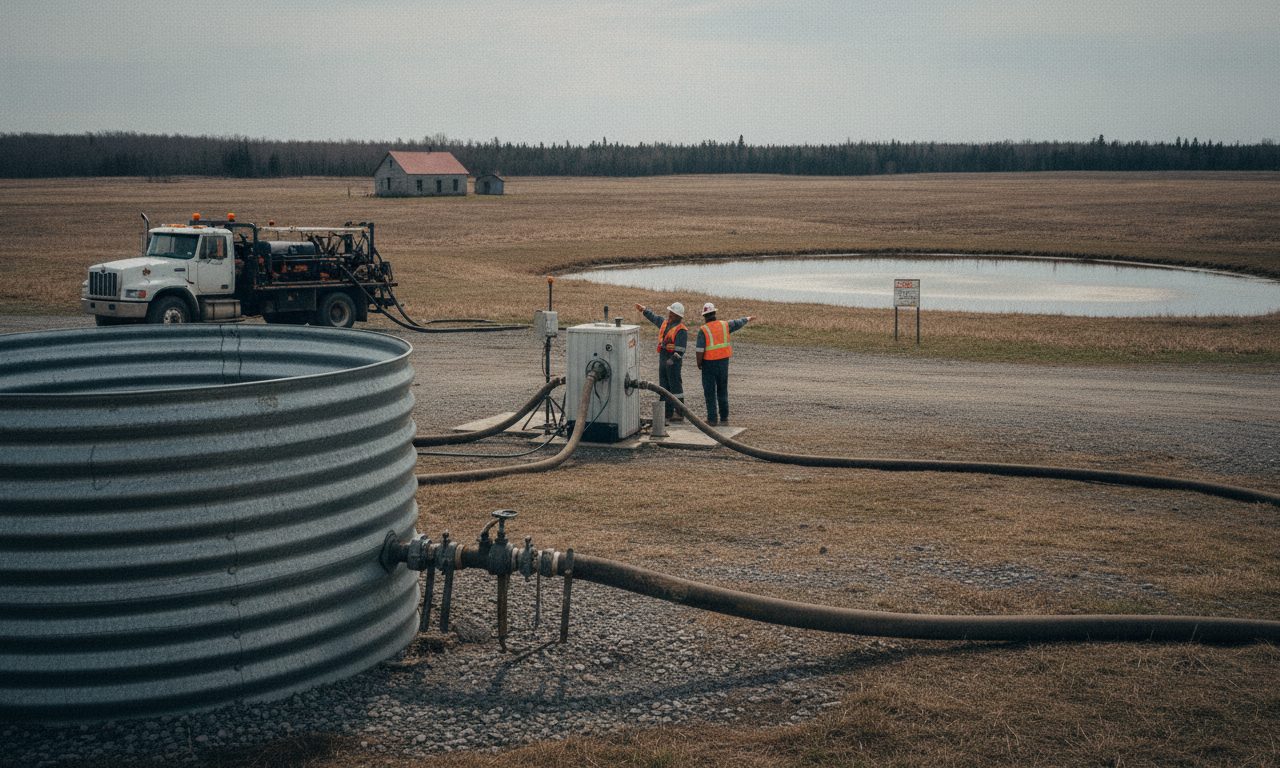
Updated Research and Industry Perspectives Emerge During Policy Review
As the provincial government reviews its 2014 moratorium on shale gas exploration until January 2027, updated scientific research and technological proposals are framing the debate over natural gas development in New Brunswick.
Jim Emberger of the New Brunswick Anti-Shale Gas Alliance noted that earlier environmental and health concerns persist with greater credence and severity. Conversely, Maurice Dusseault, an emeritus professor of geological engineering at the University of Waterloo, stated that shale gas development and hydraulic stimulation can achieve a high degree of safety compared to other industrial sectors like agriculture, mining, and fishing.
Water Usage and Contamination Debate
Water consumption remains a primary point of discussion. Emberger explained that current wells can be fracked over greater underground distances, requiring larger quantities of water. In contrast, the Canadian Association of Petroleum Producers cited practices such as recycling to highlight ongoing efficiency improvements. Dusseault added that reusing fluid limits the volume of water requiring treatment or underground storage.
Regarding water quality, Emberger pointed to cases where wastewater migrated and contaminated supplies. Dusseault stated that such incidents are rare and thoroughly investigated to update guidelines. Both agreed that methane has contaminated some residential wells, though Dusseault attributed this primarily to leaky well casings rather than hydraulic fracturing itself, emphasizing the need for strict cementing regulations.
Health Impacts and Technological Alternatives
Recent health studies highlighted by Emberger include a 2025 University of Pittsburgh study linking proximity to fracking sites with increased lymphoma risk in children, alongside a 2022 University of Calgary study associating proximity to wells in rural Alberta with lower birth weight, birth defects, and higher rates of preterm birth.
Addressing potential technological shifts, Calgary-based Jim Livingstone described a drilling method involving dry air, a valve system, and reverse circulation centred discharge technology. Proposed for a joint venture between Innovation Energy and Pabineau First Nation in Stoney Creek near Moncton, the technique requires under 20,000 litres of water per well, compared to approximately 23 million litres used in Western Canada. Livingstone stated the method suits the province’s clay-heavy lake shales, though Dusseault disputed that assessment, asserting New Brunswick’s shale formations remain well suited for standard hydraulic stimulation.
Seismic Activity and Climate Considerations
Dusseault acknowledged growing consensus regarding fracking-induced earthquakes, noting jurisdictions like Alberta and British Columbia utilize a traffic light system to reduce pressure or halt operations based on seismic thresholds. Meanwhile, Emberger stressed that climate science developments make fossil fuel expansion a driver of increased floods, wildfires, and deaths, even as industry representatives report efforts to reduce methane emissions.







NB STORIES
BC Conservatives Assign Key Legislative Roles Following Cabinet Selection
BC Premier Lorne Doerkson announces his Conservative caucus leadership team, naming Trevor Halford as house leader and nominating Teresa Wat as speaker.

Key Positions Filled in Legislative Assembly
Surrey-White Rock MLA Trevor Halford will serve as government house leader as Premier Lorne Doerkson fills out his caucus leadership assignments. The announcement follows the swearing-in of the provincial cabinet and parliamentary secretaries at Victoria’s Government House on Friday, Nov. 20.
In a released statement, Doerkson expressed confidence in the caucus, stating the team includes representatives “who are ready to roll up their sleeves and get to work.” He noted that the leadership group will support elected members while maintaining focus on British Columbians’ priorities.
Speakers and Whips Named
The party has designated West Kelowna-Peachland MLA Macklin McCall as government whip, supported by Vancouver-Langara MLA Jaime Stein as deputy government whip. For legislative proceedings, long-serving Richmond-Bridgeport MLA Teresa Wat is nominated to become speaker. Fraser-Nicola MLA Tony Luck is tapped for deputy speaker and chair of the committee of the whole, alongside Delta North MLA Monica Mohan as deputy chair.
Major Cabinet Portfolios
The caucus leadership appointments follow earlier executive announcements. Portfolio assignments include West Vancouver-Capilano MLA Caroline Elliott as attorney general, Kamloops Centre MLA Peter Milobar in finance, Coquitlam-Burke Mountain MLA Ryan Peterson overseeing health, Peace River South MLA Larry Neufeld handling energy, mines and petroleum resources, and North Vancouver-Seymour MLA Lynne Block leading education and child care.
NB STORIES
What B.C.’s New Conservative Government and Cabinet Mean for You
Lorne Doerkson has been sworn in as B.C.’s 38th premier, leading the province’s first Conservative government this century with a streamlined 18-member cabinet.

Lorne Doerkson Assumes Premiership in Victoria
British Columbia entered a new political era on Friday, Nov. 20, as Lt.-Gov. Wendy Cocchia officially swore in Lorne Doerkson as the province’s 38th premier. The ceremony marks the start of the first Conservative administration in B.C. during this century.
Addressing the public following the swearing-in ceremony, Doerkson delivered a message centered on unity across diverse political and social backgrounds. “We worship differently, we vote differently, and we see the world differently,” Doerkson said. “But we are neighbours first and British Columbians together.”
The new premier also recalled the moment he and his wife, Shelley, learned he would become interim leader while traveling through Amsterdam Schiphol Airport on their way home. “I remember you turning around and walking away from me in the Amsterdam airport,” he recalled. “I promise you, I didn’t know this either.”
Cabinet Restructured into 18 Ministries
As part of the transition, the provincial government restructured its executive branch, reducing the total number of ministries from 23 down to 18. The realigned portfolios include combining housing and municipal affairs into the Ministry of Local Government, Housing, Sport and Culture. Additionally, the former Energy and Climate Solutions portfolio was renamed the Ministry of Energy, Mines and Petroleum Resources.
Several top cabinet assignments were confirmed during the ceremony. Peter Milobar was appointed Minister of Finance after rejoining the party following a brief departure. Freshman legislator Caroline Elliott was named Attorney General, and Ryan Peterson assumes the role of Minister of Health. Skeena MLA Claire Rattée takes on responsibilities as deputy premier and Minister of Social Development. Longtime Richmond MLA Teresa Wat is slated for nomination as speaker of the legislature.
Key Regional Portfolios and Appointments
The newly formed cabinet features several key appointments across provincial sectors:
• Agriculture: Ian Paton
• Environment: A’a:líya Warbus
• Forests: Kiel Giddens
• Indigenous Relations and Reconciliation: Scott McInnis
• Public Safety and Solicitor General: Jessy Sahota
• Transportation and Infrastructure: Trevor Halford
• Water, Land and Natural Resource Operations: Donegal Wilson
In addition, Doerkson named parliamentary secretaries for specific files, including Rosalyn Bird for Armed Forces and Veterans Affairs, Steve Kooner for ICBC, Megan Knight for Metro Vancouver, and Harj Dhaliwal for TransLink.
NB STORIES
What Xplore’s Creditor Protection Means for Rural Internet Service
Xplore Inc. has obtained court creditor protection following missed loan payments, securing $77M in initial financing to maintain rural internet service.
Court Protection Granted Following Default on Debt
Rural internet provider Xplore Inc. has entered creditor protection under the federal Companies’ Creditors Arrangement Act following an order from the Ontario Superior Court of Justice. The step was taken after the organization failed to meet two loan interest obligations, including a $5,176,934 US payment on Oct. 30 and an $821,340.17 US payment on Nov. 4.
According to an affidavit from chief restructuring officer William Aziz, the business is insolvent and incapable of fulfilling its financial commitments as they become due, leaving it with limited cash reserves. Court documents reveal that attempts to secure additional financing through major shareholder Stonepeak Falcon Holdings and other lenders were unsuccessful, prompting the company to consider selling portions of its assets.
Operations and Employment Footprint
Originally established in Woodstock, New Brunswick, Xplore maintains offices in its founding town as well as Fredericton. It serves as Canada’s largest internet service provider focusing on rural areas and maintains a workforce of approximately 1,100 people, which includes roughly 400 staff members in New Brunswick.
The company issued a news release stating that the court-supervised process permits it to restructuring its business and capital framework while continuing to serve customers. Xplore confirmed it intends to maintain network operations without disruption and indicated it would provide no further statements outside its official release.
Interim Financing and Industry Challenges
To keep the business running, the court authorized debtor-in-possession financing. Xplore requested approval for up to $154.5 million in total funding, securing an initial advance of $77 million intended to sustain operations under its current budget through February.
The filing details multiple commercial pressures, including a 13 per cent year-over-year decline in subscribers reported in June. Xplore also faces high capital requirements to expand its nationwide fibre optic network. Expanding infrastructure in provinces such as Ontario, Alberta, New Brunswick, Prince Edward Island, and Newfoundland and Labrador relies on federal and provincial funding that is awarded retroactively after completing project milestones, leaving Xplore to absorb upfront expenses. A federal moratorium enacted in March 2023 has further restricted network monetization, while competitors like Elon Musk’s Starlink—which has operated in New Brunswick for nearly six years—now serve over half a million Canadian customers.
Your Current 3 Day Forecast — November 24, 2026
Your Current 3 Day Forecast — November 23, 2026
Your Current 3 Day Forecast — November 22, 2026
Your Current 3 Day Forecast — November 21, 2026

This weekend in Miramichi: Thu 19 — Sat 21 November

BC Conservatives Assign Key Legislative Roles Following Cabinet Selection

Vancouver Canucks Gear Up for a Make-or-Break 2025–26 Season

B.C. Supreme Court Grants Cowichan Tribes Title to Historic Richmond Lands and Fishing Rights

Land Title and Reconciliation: Canada Can’t Afford to Let Uncertainty Fester

Team B.C. Secures Margaret Todd Trophy at National Women’s Mid-Amateur Golf

Ottawa Unveils Build Canada Homes with $13B to Tackle Housing Crisis

Blue Jays Extend Win Streak, but Lose Bichette for Regular Season
-
NB STORIES5 days ago
What Xplore’s Creditor Protection Means for Rural Internet Service
-
 COMMUNITY4 days ago
This weekend in Miramichi: Thu 19 — Sat 21 November
-

 HEALTH7 days ago
Innovative Staffing Measures Bring Paramedics to Miramichi ER During Nursing Crunch
-
WORLD7 days ago
Why David Beckham Is Seeking $41 Million Over Discount Fragrance Sales
-
SPORTS6 days ago
Tyler Boucher Scores Game-Winner in NHL Debut as Senators Defeat Jets 2-1
-

 NATIONAL STORIES6 days ago
Mission B.C. Pop Star Carly Rae Jepsen to Host 2027 JUNO Awards
-
LOCAL5 days ago
Your Current 3 Day Forecast — November 19, 2026
-
SPORTS5 days ago
Why Winnipeg is saying goodbye to all-time wins leader Mike O’Shea