LOCAL
NATO Secretary General Mark Rutte Affirms Unwavering US Commitment Amidst Strategic Autonomy Debate
NATO Secretary General Mark Rutte reaffirms the United States’ commitment to the alliance, countering calls for European military autonomy and emphasizing unity.


The Transatlantic Bond Remains Indissoluble
In a significant diplomatic maneuver aimed at stabilizing the internal tremors within the North Atlantic Treaty Organization (NATO), Secretary General Mark Rutte has issued a staunch defense of the United States’ continued involvement in European security. Speaking on Saturday, Rutte addressed the growing apprehension across European capitals regarding the future of the transatlantic alliance, particularly in light of shifting political winds in Washington. His message was unequivocal: the United States remains firmly devoted to the alliance, not merely out of historical sentiment, but as a matter of strategic necessity and mutual benefit. Rutte, who recently transitioned from his long-standing role as the Prime Minister of the Netherlands to the helm of the world’s most powerful military alliance, emphasized that the bond between North America and Europe is the bedrock of global stability. This sentiment pointedly counters recent calls from some European quarters to seek military autonomy separate from American leadership, a concept that Rutte views as both impractical and potentially dangerous for the cohesion of the West.
Countering the Narrative of European Strategic Autonomy
The concept of ‘strategic autonomy’ has gained considerable traction in recent years, spearheaded primarily by French President Emmanuel Macron and supported by various institutional voices in Brussels. These advocates argue that Europe must develop the independent military capacity to protect its interests and project power, fearing that a potential shift in American foreign policy, characterized by isolationism or a pivot toward the Indo-Pacific, could leave the continent vulnerable. However, Secretary General Rutte offered a firm rebuttal to this line of thinking during his Saturday address. While he acknowledged the absolute necessity for European nations to increase their defense spending and modernize their armed forces, he cautioned against any move that would create a functional or psychological disconnect from the United States. According to Rutte, the security of Europe is inextricably linked to the American nuclear umbrella and the vast intelligence, satellite, and logistical capabilities that only the U.S. military can provide at scale. He argued that pursuing autonomy in a way that excludes or diminishes the U.S. role would be a strategic error, potentially fracturing the unity that has deterred major conflict on the continent for over seven decades. For Rutte, the goal should not be autonomy from the U.S., but a more robust European pillar within the NATO framework.
The Burden-Sharing Debate and Domestic Politics
A central theme of Rutte’s address was the perennial issue of burden-sharing, a topic that has often caused friction between Washington and its European allies. For years, American leaders across the political spectrum have called for European allies to meet the agreed-upon target of spending 2% of their GDP on defense. Rutte addressed this directly, noting that while significant progress has been made, with a record number of allies now meeting or exceeding the target, there is still substantial work to be done. He framed the U.S. demand for greater European investment not as a sign of withdrawal or lack of commitment, but as a legitimate call for a more balanced and sustainable partnership. By taking on a greater share of the financial and operational burden, Rutte suggested that European nations actually solidify the American commitment by proving that the alliance is a shared enterprise rather than a one-sided security guarantee. Rutte’s rhetoric appears carefully calibrated to resonate with the American public and policymakers, emphasizing that a stronger, more invested Europe makes for a stronger NATO, which in turn serves American national interests by maintaining a stable international order that benefits global trade and democratic values.
Geopolitical Realities: Ukraine and the Global Stage
The ongoing war in Ukraine served as the somber backdrop to Rutte’s remarks, providing a real-world validation of his thesis. The conflict has acted as a catalyst for NATO’s revitalization, forcing member states to confront the reality of high-intensity industrial warfare in the 21st century. Rutte highlighted that the U.S. leadership in coordinating aid, providing advanced weaponry, and sharing critical intelligence with Kyiv has been the linchpin of the Ukrainian defense. Without the American logistical engine and its sophisticated hardware, the defense of Ukraine would have faced nearly insurmountable odds. This reality, he suggested, proves that European security cannot be managed in a vacuum or through fragmented local initiatives. Furthermore, Rutte touched upon the broader geopolitical landscape, including the rising challenges posed by an increasingly assertive China and the complexities of the Indo-Pacific. He argued that NATO remains the primary forum where the U.S. and its allies can coordinate responses to global threats, whether they originate from traditional state actors or unconventional challenges like cyberwarfare, disinformation, and the weaponization of energy. The Secretary General’s vision is one of an integrated, globalized NATO where the U.S. remains the ‘first among equals,’ providing the necessary gravity to keep the diverse interests of the 32 member states aligned toward a common purpose.
A Call for Unity in Uncertain Times
As the international community looks toward the upcoming NATO summits and the challenges of the next decade, Rutte’s Saturday address serves as a foundational text for his tenure. He is positioning himself as a pragmatist and a bridge-builder, someone capable of navigating the complex domestic politics of member states while maintaining a laser focus on the alliance’s core mission of collective defense under Article 5. By reaffirming the U.S. dedication to NATO, Rutte is attempting to lower the temperature of the ‘strategic autonomy’ debate and refocus energy on practical integration, military readiness, and the expansion of the defense industrial base across the alliance. His conclusion was a call for steadfastness; he urged allies to look past the transient headlines of political campaigns and recognize the enduring, non-partisan value of the transatlantic pact. In an era defined by rapid technological change and escalating geopolitical tensions, Rutte’s NATO is one that seeks strength through cohesion, firmly anchored by the military might and political will of the United States, complemented by a revitalized and increasingly capable Europe. The path forward, according to the Secretary General, is not one of separation or isolation, but of a more profound and equitable partnership that can withstand the tests of the coming decades.

LOCAL
Your Current 3 Day Forecast — October 23, 2026
Your Current 3 Day Environment Canada forecast for Miramichi, Rogersville, Doaktown.

THE MIRAMICHI CURRENT · WEATHER
Your Current 3 Day Forecast
October 23, 2026
Across our communities
| Community | High / low | Rain | Wind | Alert |
|---|---|---|---|---|
| Miramichi | 13° / -3° | 0% | N 20 km/h | None |
| Rogersville | 13° / -3° | 0% | N 20 km/h | None |
| Doaktown | 13° / -5° | 0% | N 20 km/h | None |
Miramichi
Now
8.6°
Current condition unavailable
Sunrise 7:51 a.m. · Sunset 6:21 p.m.
Moon: Waxing gibbous · 94% lit
Observed 4:00 p.m.
Next 12 hours
Tonight
A few clouds. Wind north 20 km/h gusting to 40 becoming light overnight. Low minus 3. Wind chill minus 8 overnight.
Rain 0%Wind 20 km/hGusts 40 km/h
Saturday
Sunny. Wind up to 15 km/h. High 13. Wind chill minus 7 in the morning. UV index 2 or low.
Rain 0%Wind 10 km/h
Sunday
Sunny. High 15.
Rain 0%Wind 0 km/h
Rogersville
Now
7.2°
Current condition unavailable
Sunrise 7:50 a.m. · Sunset 6:20 p.m.
Moon: Waxing gibbous · 94% lit
Observed 4:00 p.m.
Next 12 hours
Tonight
A few clouds. Wind north 20 km/h gusting to 40 becoming light overnight. Low minus 3. Wind chill minus 8 overnight.
Rain 0%Wind 20 km/hGusts 40 km/h
Saturday
Sunny. Wind up to 15 km/h. High 13. Wind chill minus 7 in the morning. UV index 2 or low.
Rain 0%Wind 10 km/h
Sunday
Sunny. High 15.
Rain 0%Wind 0 km/h
Doaktown
Now
9.4°
Current condition unavailable
Sunrise 7:53 a.m. · Sunset 6:24 p.m.
Moon: Waxing gibbous · 94% lit
Observed 4:00 p.m.
Next 12 hours
Tonight
Clear. Wind north 20 km/h becoming light this evening. Low minus 5.
Rain 0%Wind 20 km/h
Saturday
Sunny. High 13. UV index 2 or low.
Rain 0%Wind 0 km/h
Sunday
Sunny. High 16.
Rain 0%Wind 0 km/h
Track the weather
Last checked 2026-10-23T19:15:25.000Z · Changed: Miramichi, Rogersville, Doaktown · forecast, temperature, wind, hourly · Next check 2026-10-23T20:15:00.000Z
LOCAL
Dissident PC Member Prepares to Launch New Political Option in New Brunswick
Former Progressive Conservative member Jason Purdy plans to establish the New Brunswick Party following Daniel Allain’s PC leadership election victory.
Former Conservative Activist Mobilizes New Political Movement
Voters in New Brunswick could soon see a new political option on their ballots as Jason Purdy, a former Progressive Conservative Party member, prepares to register a centre-right organization called the New Brunswick Party. Purdy, a resident of Noonan near Fredericton, stated that his decision follows the recent PC leadership victory of Daniel Allain. Disagreeing with Allain’s vision of a socially progressive and fiscally conservative party, Purdy aims to offer an alternative for traditional conservative voters who feel unrepresented by the current leadership.
Registration Rules and Leadership Response
Under provincial electoral laws, registering a new political entity requires forming riding associations in at least 10 provincial ridings, with a minimum of 10 candidates needed to secure a spot on the election ballot. Purdy expects to complete the registration process within a month, citing initial support from a dozen organizers and interest from several hundred supporters. Should a provincial byelection be triggered for Allain—who currently does not hold a seat in the legislature—Purdy intends to run a candidate against him. For his part, Allain dismissed concerns that a new entity would divide votes, expressing confidence in his party’s existing membership strength following his victory over MLA Don Monahan.
Historical Context and Political Reactions
If successfully registered, the New Brunswick Party would mark the third Tory breakaway movement in the province over the past four decades. Previous historical splinters include the Confederation of Regions party in 1989 and the People’s Alliance in 2010. Addressing the initiative, PC caucus member Kris Austin characterized the creation of another political group as counterproductive, arguing that conservative voters must find common ground rather than risk public division. Meanwhile, Purdy emphasized that his proposed party will actively reject radical or extreme ideologies from both sides of the political spectrum.
COMMUNITY
What the Latest Strike Delay Means for the Arbec Wellness Centre Opening
Miramichi’s Arbec Wellness Centre opening is pushed to early next year following a summer electricians’ strike that added $250,000 to project costs.
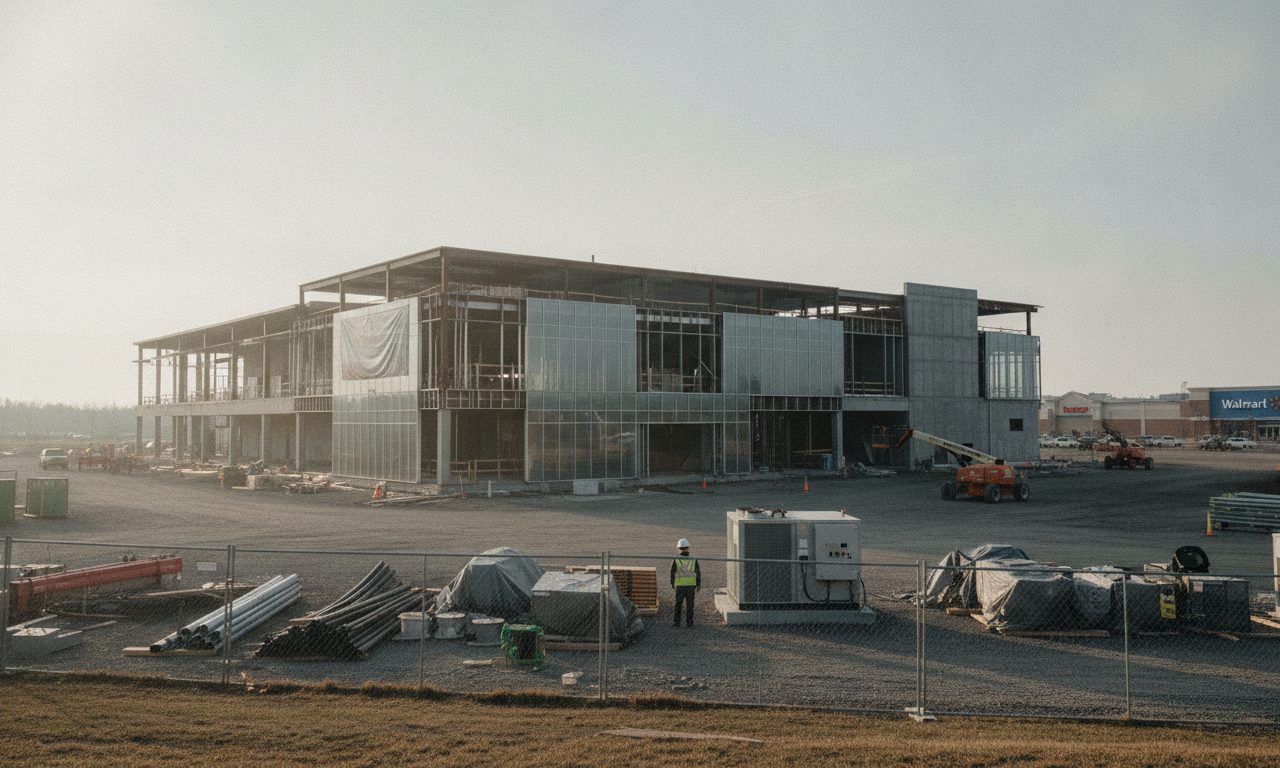
Cost and Schedule Impacts
The budget for Miramichi’s new Arbec Wellness Centre has risen by approximately $250,000 following a four-week labor dispute. The project’s price tag now stands at an estimated $100.8 million, up from $100.6 million. Construction is now expected to wrap up around Jan. 22, setting up a potential move-in date in February after a two- to four-week transition period.
Strike Causes Ripple Effect
Speaking at the Sept. 29 council-in-committee meeting, CBCL Limited engineer Tim McLeod explained that the summer walkout by International Brotherhood of Electrical Workers Local 1555 caused wider scheduling disruptions. While the strike has ended, its impact extended beyond electrical work to delay mechanical and commissioning activities that relied on critical path milestones.
Facility Location
The long-awaited municipal facility is currently nearing completion off Douglastown Boulevard, situated west of Service Canada and Walmart.
Your Current 3 Day Forecast — October 23, 2026
Dissident PC Member Prepares to Launch New Political Option in New Brunswick

A Conservative Organizer Aims to Launch a New Centre-Right Movement in New Brunswick

Why B.C. Lions Starters Are Resting as the Regular Season Concludes Against Winnipeg

What the Latest Strike Delay Means for the Arbec Wellness Centre Opening

Why Alberta’s Government Is Ruling Out Future Separation Votes

B.C. Supreme Court Grants Cowichan Tribes Title to Historic Richmond Lands and Fishing Rights

Vancouver Canucks Gear Up for a Make-or-Break 2025–26 Season

Land Title and Reconciliation: Canada Can’t Afford to Let Uncertainty Fester

Team B.C. Secures Margaret Todd Trophy at National Women’s Mid-Amateur Golf

Ottawa Unveils Build Canada Homes with $13B to Tackle Housing Crisis

Blue Jays Extend Win Streak, but Lose Bichette for Regular Season
-

 NATIONAL STORIES7 days ago
Why Albertans Are Heading to the Polls on the Question of Canadian Unity
-
 NB STORIES6 days ago
New Brunswick Progressive Conservatives to Reveal New Leader as Convention Concludes
-
 NATIONAL STORIES6 days ago
Decades of Western Alienation Lead Albertans to Referendum on Canada’s Future
-
LOCAL4 days ago
Your Current 3 Day Forecast — October 19, 2026
-
LOCAL6 days ago
Your Current 3 Day Forecast — October 17, 2026
-
NATIONAL STORIES5 days ago
Tragedy at CFB Wainwright frames last-minute calls for unity as Albertans prepare for referendum vote
-
LOCAL5 days ago
Your Current 3 Day Forecast — October 18, 2026
-
NB STORIES4 days ago
Why Calls for Mandatory Training for New Municipal Leaders Are Growing in New Brunswick