LOCAL
The Sovereign’s Shadow: Navigating the Winds of Change in the British Monarchy 2025
An in-depth analysis of the British monarchy’s challenges and shifts throughout 2025, exploring the transition of power, financial transparency, and public perception.


A Year of Unprecedented Trial
As the calendar turned to 2025, the House of Windsor found itself at a crossroads that few constitutional scholars could have predicted during the late Queen Elizabeth II’s long and stable reign. The transition from the Elizabethan era to the Caroline age has been marked by a series of systemic shocks that have tested the very foundations of the British monarchy. While the institution remains constitutionally secure, the social and political fabric surrounding it has begun to fray under the pressures of modern transparency and shifting global loyalties. King Charles III, entering his third year on the throne, has faced a dual challenge: maintaining the dignity of an ancient office while acknowledging the urgent need for structural evolution. The year has been defined by a public that is increasingly vocal about its expectations, demanding a monarchy that is not only ceremonial but also accountable and relevant to the economic realities of a post-pandemic, high-inflation world.
The Weight of the Crown
Health concerns have dominated the royal narrative throughout the first half of 2025. Following the medical disclosures of previous years, the palace has adopted a policy of controlled transparency, a delicate balancing act intended to quell public anxiety without compromising the sovereign’s privacy. This strategy has seen Prince William, the Prince of Wales, taking on an increasingly significant share of public duties. The shifting workload has not only accelerated the transition period but has also placed the future of the monarchy firmly in the hands of the younger generation. Observers note that the King’s focus on environmental stewardship and social cohesion remains steadfast, yet the logistical realities of his reign have forced a prioritization of duty over public visibility. The internal dynamics of the family have also been tested, as the ‘slimmed-down’ monarchy model means that fewer individuals are carrying a greater burden of the thousands of annual engagements traditionally expected of the royals.
The Prince of Wales and Modernization
Prince William’s emergence as the primary face of the monarchy in 2025 has brought with it a distinct shift in tone. His approach is characterized by a more informal, direct engagement with the public, focusing on tangible social issues such as homelessness and mental health. This ‘Williamite’ approach seeks to move the monarchy away from mere pageantry and toward a model of active social impact. However, this modernization has not been without its critics. Traditionalists argue that by stripping away the mystique of the crown, the institution risks becoming just another high-profile NGO, losing the symbolic power that differentiates it from political leadership. The balance between being relatable and remaining exceptional is the central struggle of William’s current tenure. Furthermore, the role of Catherine, Princess of Wales, has been pivotal; her focus on early childhood development has provided a soft-power anchor for the family’s public image, even as the institution navigates more turbulent political waters.
The Financial Lens and Public Scrutiny
Perhaps the most significant hurdle in 2025 has been the escalating demand for financial transparency. Amidst a fluctuating UK economy, the cost of the monarchy has come under intense scrutiny from both parliamentary committees and the public. The debate over the Sovereign Grant and the private revenues of the Duchies of Lancaster and Cornwall has reached a fever pitch. In response, the Palace has signaled a willingness to review certain financial structures, including a more comprehensive disclosure of the royal family’s private wealth. This move toward ‘financial perestroika’ is seen as a necessary survival mechanism in an era where public funding is under constant review. The narrative of a ‘slimmed-down’ monarchy is no longer just a logistical preference but an economic imperative. Questions regarding the maintenance of vast estates and the inheritance tax exemptions enjoyed by the crown have become central themes in the national conversation about fairness and institutional privilege.
The Commonwealth and Global Standing
Internationally, the year 2025 has seen a continued re-evaluation of the monarchy’s role within the Commonwealth. Several nations have intensified discussions regarding their transition to republics, viewing the coronation and subsequent years as a natural point of departure from the colonial past. King Charles III has addressed these movements with a stance of diplomatic neutrality, stating that the future of each nation lies within the hands of its people. Nevertheless, the loss of these constitutional ties represents a narrowing of the British monarchy’s global reach. To counter this, the royal family has intensified its ‘soft power’ diplomacy, focusing on international cooperation on climate change and humanitarian aid, attempting to redefine their relevance on the world stage beyond the borders of the Commonwealth realms. These state visits are now less about imperial legacy and more about strategic partnership and cultural exchange.
The Public Perception Gap
Polling data in 2025 reveals a generational divide that poses the greatest long-term threat to the institution. While older demographics remain steadfastly loyal to the crown, younger citizens express a mix of indifference and skepticism. The challenge for the Windsors is to demonstrate that a hereditary monarchy can coexist with the democratic values of the 21st century. The digital strategy of the palace has become more aggressive, utilizing social media platforms to narrate their work in real-time, yet the core question of relevance remains. Can an institution based on birthright truly represent a diverse and meritocratic society? This is the question that haunts the hallowed halls of Buckingham Palace as the year progresses. The ‘Spare’ narrative and the ongoing distance from the Duke and Duchess of Sussex also continue to provide a complicating counter-narrative that the palace has struggled to fully neutralize.
Conclusion: A Resilient Institution
Despite these myriad challenges, the British monarchy in 2025 continues to exhibit a remarkable capacity for adaptation. It has survived centuries of political upheaval, and its current state is less a decline and more a profound transformation. As King Charles III continues to navigate his reign and Prince William prepares for his inevitable succession, the House of Windsor is proving that it can bend without breaking. The turmoil of 2025 has not signaled the end of the monarchy, but rather the beginning of its most significant evolution since the early 20th century. Whether this evolution will be enough to secure its place for the next hundred years remains to be seen, but for now, the crown remains a central, if contested, pillar of British identity. The survival of the monarchy will ultimately depend on its ability to prove that it can serve as a unifying symbol in a world that feels increasingly divided.

LOCAL
Your Current 3 Day Forecast — October 23, 2026
Your Current 3 Day Environment Canada forecast for Miramichi, Rogersville, Doaktown.

THE MIRAMICHI CURRENT · WEATHER
Your Current 3 Day Forecast
October 23, 2026
Across our communities
| Community | High / low | Rain | Wind | Alert |
|---|---|---|---|---|
| Miramichi | 13° / -3° | 0% | N 20 km/h | None |
| Rogersville | 13° / -3° | 0% | N 20 km/h | None |
| Doaktown | 13° / -5° | 0% | N 20 km/h | None |
Miramichi
Now
8.6°
Current condition unavailable
Sunrise 7:51 a.m. · Sunset 6:21 p.m.
Moon: Waxing gibbous · 94% lit
Observed 4:00 p.m.
Next 12 hours
Tonight
A few clouds. Wind north 20 km/h gusting to 40 becoming light overnight. Low minus 3. Wind chill minus 8 overnight.
Rain 0%Wind 20 km/hGusts 40 km/h
Saturday
Sunny. Wind up to 15 km/h. High 13. Wind chill minus 7 in the morning. UV index 2 or low.
Rain 0%Wind 10 km/h
Sunday
Sunny. High 15.
Rain 0%Wind 0 km/h
Rogersville
Now
7.2°
Current condition unavailable
Sunrise 7:50 a.m. · Sunset 6:20 p.m.
Moon: Waxing gibbous · 94% lit
Observed 4:00 p.m.
Next 12 hours
Tonight
A few clouds. Wind north 20 km/h gusting to 40 becoming light overnight. Low minus 3. Wind chill minus 8 overnight.
Rain 0%Wind 20 km/hGusts 40 km/h
Saturday
Sunny. Wind up to 15 km/h. High 13. Wind chill minus 7 in the morning. UV index 2 or low.
Rain 0%Wind 10 km/h
Sunday
Sunny. High 15.
Rain 0%Wind 0 km/h
Doaktown
Now
9.4°
Current condition unavailable
Sunrise 7:53 a.m. · Sunset 6:24 p.m.
Moon: Waxing gibbous · 94% lit
Observed 4:00 p.m.
Next 12 hours
Tonight
Clear. Wind north 20 km/h becoming light this evening. Low minus 5.
Rain 0%Wind 20 km/h
Saturday
Sunny. High 13. UV index 2 or low.
Rain 0%Wind 0 km/h
Sunday
Sunny. High 16.
Rain 0%Wind 0 km/h
Track the weather
Last checked 2026-10-23T19:15:25.000Z · Changed: Miramichi, Rogersville, Doaktown · forecast, temperature, wind, hourly · Next check 2026-10-23T20:15:00.000Z
LOCAL
Dissident PC Member Prepares to Launch New Political Option in New Brunswick
Former Progressive Conservative member Jason Purdy plans to establish the New Brunswick Party following Daniel Allain’s PC leadership election victory.
Former Conservative Activist Mobilizes New Political Movement
Voters in New Brunswick could soon see a new political option on their ballots as Jason Purdy, a former Progressive Conservative Party member, prepares to register a centre-right organization called the New Brunswick Party. Purdy, a resident of Noonan near Fredericton, stated that his decision follows the recent PC leadership victory of Daniel Allain. Disagreeing with Allain’s vision of a socially progressive and fiscally conservative party, Purdy aims to offer an alternative for traditional conservative voters who feel unrepresented by the current leadership.
Registration Rules and Leadership Response
Under provincial electoral laws, registering a new political entity requires forming riding associations in at least 10 provincial ridings, with a minimum of 10 candidates needed to secure a spot on the election ballot. Purdy expects to complete the registration process within a month, citing initial support from a dozen organizers and interest from several hundred supporters. Should a provincial byelection be triggered for Allain—who currently does not hold a seat in the legislature—Purdy intends to run a candidate against him. For his part, Allain dismissed concerns that a new entity would divide votes, expressing confidence in his party’s existing membership strength following his victory over MLA Don Monahan.
Historical Context and Political Reactions
If successfully registered, the New Brunswick Party would mark the third Tory breakaway movement in the province over the past four decades. Previous historical splinters include the Confederation of Regions party in 1989 and the People’s Alliance in 2010. Addressing the initiative, PC caucus member Kris Austin characterized the creation of another political group as counterproductive, arguing that conservative voters must find common ground rather than risk public division. Meanwhile, Purdy emphasized that his proposed party will actively reject radical or extreme ideologies from both sides of the political spectrum.
COMMUNITY
What the Latest Strike Delay Means for the Arbec Wellness Centre Opening
Miramichi’s Arbec Wellness Centre opening is pushed to early next year following a summer electricians’ strike that added $250,000 to project costs.
Cost and Schedule Impacts
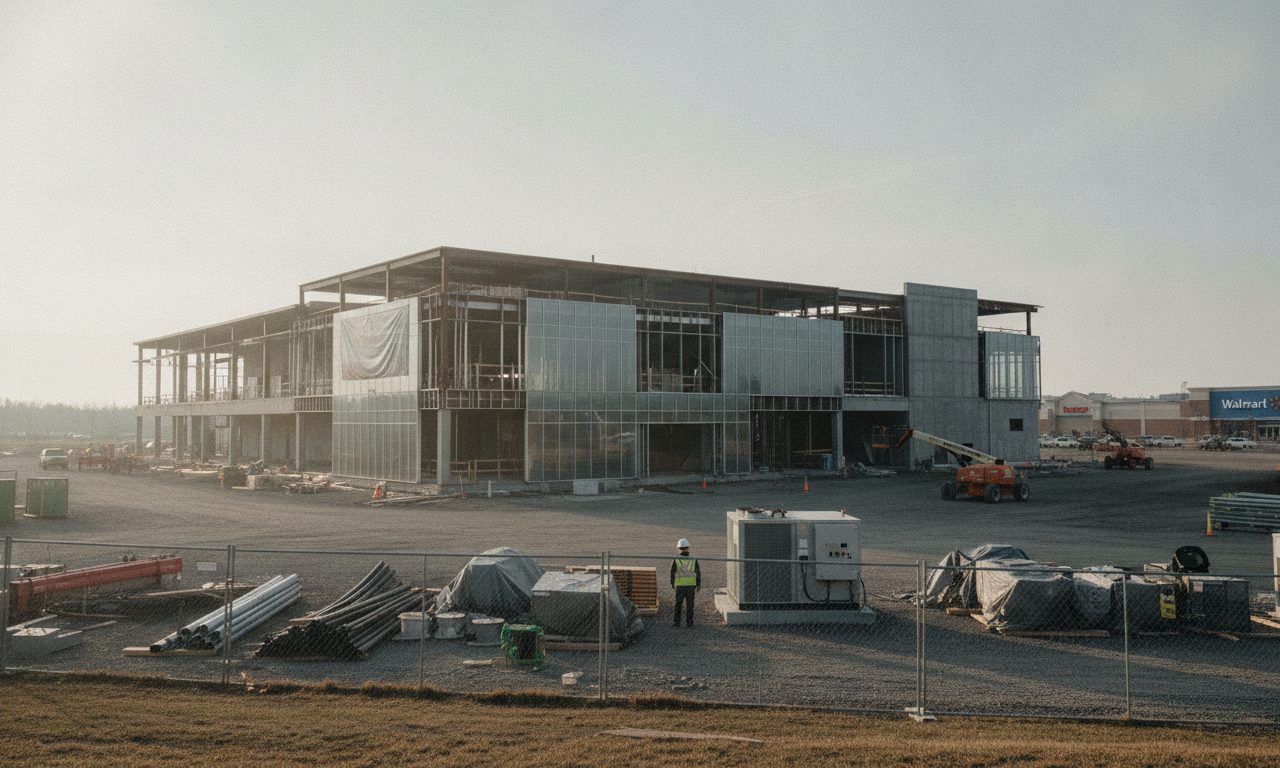
The budget for Miramichi’s new Arbec Wellness Centre has risen by approximately $250,000 following a four-week labor dispute. The project’s price tag now stands at an estimated $100.8 million, up from $100.6 million. Construction is now expected to wrap up around Jan. 22, setting up a potential move-in date in February after a two- to four-week transition period.
Strike Causes Ripple Effect
Speaking at the Sept. 29 council-in-committee meeting, CBCL Limited engineer Tim McLeod explained that the summer walkout by International Brotherhood of Electrical Workers Local 1555 caused wider scheduling disruptions. While the strike has ended, its impact extended beyond electrical work to delay mechanical and commissioning activities that relied on critical path milestones.
Facility Location
The long-awaited municipal facility is currently nearing completion off Douglastown Boulevard, situated west of Service Canada and Walmart.
Your Current 3 Day Forecast — October 23, 2026
Dissident PC Member Prepares to Launch New Political Option in New Brunswick

A Conservative Organizer Aims to Launch a New Centre-Right Movement in New Brunswick

Why B.C. Lions Starters Are Resting as the Regular Season Concludes Against Winnipeg

What the Latest Strike Delay Means for the Arbec Wellness Centre Opening

Why Alberta’s Government Is Ruling Out Future Separation Votes

B.C. Supreme Court Grants Cowichan Tribes Title to Historic Richmond Lands and Fishing Rights

Vancouver Canucks Gear Up for a Make-or-Break 2025–26 Season

Land Title and Reconciliation: Canada Can’t Afford to Let Uncertainty Fester

Team B.C. Secures Margaret Todd Trophy at National Women’s Mid-Amateur Golf

Ottawa Unveils Build Canada Homes with $13B to Tackle Housing Crisis

Blue Jays Extend Win Streak, but Lose Bichette for Regular Season
-
 NATIONAL STORIES7 days ago
Why Albertans Are Heading to the Polls on the Question of Canadian Unity
-

 NB STORIES6 days ago
New Brunswick Progressive Conservatives to Reveal New Leader as Convention Concludes
-
 NATIONAL STORIES6 days ago
Decades of Western Alienation Lead Albertans to Referendum on Canada’s Future
-
LOCAL4 days ago
Your Current 3 Day Forecast — October 19, 2026
-
LOCAL6 days ago
Your Current 3 Day Forecast — October 17, 2026
-
NATIONAL STORIES5 days ago
Tragedy at CFB Wainwright frames last-minute calls for unity as Albertans prepare for referendum vote
-
LOCAL5 days ago
Your Current 3 Day Forecast — October 18, 2026
-
NB STORIES4 days ago
Why Calls for Mandatory Training for New Municipal Leaders Are Growing in New Brunswick